

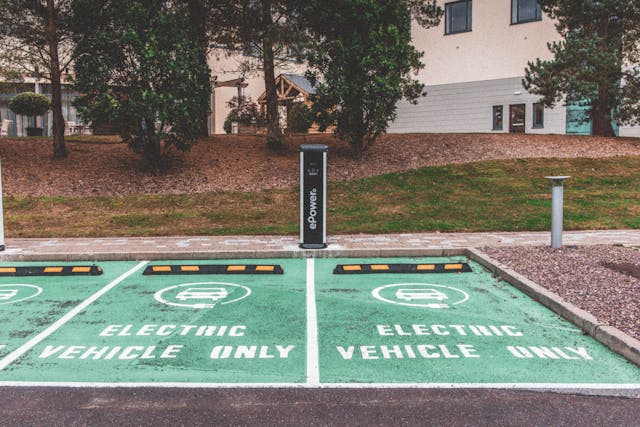
EV mobility payment news reveals how charging, digital wallets, and seamless payments are reshaping electric driving worldwide.
EV mobility payment news focuses on how drivers pay for electric vehicle charging, subscriptions, tolls, parking, and connected transport services. The industry is rapidly shifting toward contactless payments, Plug & Charge systems, mobile wallets, and in-car commerce designed to make EV ownership feel effortless rather than technical.
A strange thing happens the first time someone drives an electric car across a long distance.
The battery usually survives. The route planning apps mostly work. The charger itself might even be fast.
But then comes the payment screen.
Suddenly the future feels oddly unfinished.
One app asks for registration. Another demands an RFID card. A third charger rejects the credit card entirely. Somewhere in the process, a driver ends up standing in the rain refreshing an app while a glowing charging cable hangs uselessly beside them like a disconnected IV drip.
That tension sits at the center of today’s EV mobility payment news. Not batteries. Not motors. Payments.
Because the electric vehicle revolution is quietly becoming a financial technology story.
And honestly, the more I researched this space, the clearer it became that charging infrastructure is no longer just about electricity. It is about trust, identity, interoperability, and invisible transactions happening in the background while people simply try to move through their lives.
The companies solving that friction may shape the next decade of transportation more than the companies building the cars themselves.
EV Mobility Payment News Is No Longer Just About Charging
The phrase “mobility payments” used to sound abstract. Corporate, even.
Now it touches almost every part of transportation.
A modern EV driver may pay for:
- Public charging
- Highway tolls
- Parking
- Fleet subscriptions
- Battery-swapping services
- In-car digital purchases
- Charging reservations
- Energy management systems
The car is slowly turning into a rolling financial device.
According to recent industry reporting, companies are aggressively redesigning EV payment systems around convenience and interoperability.
And that matters more than it sounds.
People rarely abandon technologies because the technology itself fails. They abandon technologies because the experience feels exhausting.
That is where the EV industry suddenly looks vulnerable.
The “Coffee Shop Test” Is Becoming the Industry Standard
One phrase kept appearing across EV mobility payment news coverage: the “Coffee Shop Test.”
It is brilliantly simple.
Can charging an EV become as easy as buying coffee?
Right now, the answer is often no.
A 2026 charging payment study found major frustration among EV users regarding payment reliability and complexity.
That feels important because EV adoption has reached a psychological turning point.
Early adopters tolerate friction. Mainstream customers do not.
A tech enthusiast might happily manage six charging apps and compare kilowatt pricing structures for fun. A parent driving home from work with 8% battery probably will not.
And maybe that is the real shift happening beneath the headlines. EVs are moving from identity products into ordinary products.
Ordinary products need invisible payments.
Why Open Payments Are Suddenly Everywhere
One of the biggest trends in EV mobility payment news is the rise of “open-loop payments.”
The term sounds technical, but the idea is surprisingly human.
Instead of requiring a dedicated charging membership card or app, drivers can simply tap a bank card or digital wallet directly at the charger.
No ecosystem lock-in.
No downloading.
No account maze.
Visa recently partnered with Last Mile Solutions to accelerate open-loop EV charging payments across Europe.
That partnership reflects a broader realization: charging cannot stay fragmented forever.
The current system resembles early streaming television. Every provider wants users trapped inside its own ecosystem. But drivers do not think that way. They think geographically.
If someone’s battery is dying at 11 PM, loyalty programs suddenly become irrelevant.
Convenience wins.
Plug & Charge Feels Like the Real Endgame
There is another payment concept quietly reshaping the market: Plug & Charge.
This system removes the payment step almost entirely.
A driver plugs in the car, authentication happens automatically, and billing occurs invisibly in the background.
No screens.
No apps.
No cards.
Just energy transfer and departure.
The technology relies heavily on ISO 15118 standards and secure digital authentication systems.
And honestly, this might become the moment EV charging finally feels emotionally complete.
Because humans dislike transactional interruptions.
Think about how streaming replaced DVD menus. Or how contactless payments replaced signatures. The most successful systems reduce visible friction until the transaction almost disappears psychologically.
That appears to be where EV mobility payments are heading.
But Here’s the Contradiction Nobody Likes Discussing
The EV industry talks constantly about innovation.
Yet many charging stations still fail at basic reliability.
Some analysts argue the industry is racing toward AI-powered charging ecosystems while neglecting operational consistency.
That criticism feels uncomfortable because it is partially true.
Consumers may not care whether a charging network supports blockchain authentication or predictive maintenance algorithms if the payment terminal itself freezes during a road trip.
This creates a strange tension inside EV mobility payment news.
The industry is simultaneously futuristic and immature.
One company experiments with cryptocurrency charging payments while another still struggles with card reader uptime.
It is like watching two timelines overlap.
In-Car Payments Are Expanding Beyond Charging
Another fascinating development is the rise of in-car commerce.
Cars are becoming payment interfaces themselves.
Mastercard recently highlighted new in-car payment pilots allowing vehicles to handle tolling and mobility transactions directly through embedded payment systems.
That sounds futuristic until you realize it is already happening incrementally.
Drivers today already use cars to:
- Pay tolls automatically
- Subscribe to software upgrades
- Purchase charging sessions
- Access parking garages
- Activate premium navigation services
The dashboard is quietly becoming a marketplace.
And there is something psychologically profound about that transition.
For decades, vehicles represented ownership. Mechanical independence. Physical mobility.
Now they increasingly represent connected services.
Transportation is becoming software.
The Hidden Retail Economy Around EV Charging
One detail buried inside recent EV mobility payment news genuinely surprised me.
Research shows that 91% of EV drivers spend money while charging.
That statistic changes everything.
Charging stations are no longer simply infrastructure points. They are commercial ecosystems.
Drivers linger longer than traditional fuel customers. That dwell time creates entirely new economic behavior.
Coffee shops.
Convenience retail.
Micro-workspaces.
Entertainment zones.
Charging transforms idle waiting into monetizable attention.
According to mobility retail research, drivers increasingly choose charging stations based on nearby amenities rather than charger availability alone.
That means EV mobility payment systems are no longer isolated financial tools. They are becoming gateways into broader consumer ecosystems.
The charger may eventually matter less than the experience around it.
Europe Is Spending Aggressively to Solve the Ecosystem Problem
Europe currently appears determined to dominate EV infrastructure investment.
Nearly €200 billion has already been committed toward EV ecosystems, including charging infrastructure and battery supply chains.
That level of spending reflects something bigger than environmental policy.
It reflects geopolitical urgency.
Control over EV infrastructure increasingly means control over future transportation economies.
And payments sit directly inside that infrastructure layer.
Because every charging transaction creates data:
- Location behavior
- Energy demand
- Mobility patterns
- Consumer preferences
- Retail activity
Mobility payments are becoming intelligence systems.
The companies processing those payments may eventually understand transportation behavior better than automakers themselves.
The Industry Is Quietly Consolidating Around Simplicity
One pattern keeps repeating across EV mobility payment news coverage:
Consumers want fewer steps.
Not more features.
Not more ecosystems.
Fewer interruptions.
Industry leaders increasingly acknowledge this shift.
That sounds obvious, yet transportation technology historically moves in the opposite direction. More memberships. More interfaces. More fragmentation.
But mobility behaves differently because transportation stress amplifies friction emotionally.
A failed music app irritates people.
A failed charging payment can strand them.
The emotional stakes are higher.
Crypto Payments Enter the Conversation — Carefully
Some charging networks are now exploring cryptocurrency support.
Blink Charging announced plans to integrate crypto payment options across its network.
At first glance, this feels like a marketing gimmick.
Maybe it partially is.
But it also reveals something deeper: mobility payments are becoming programmable.
Once transportation systems become fully digital, almost any financial layer becomes technically possible:
- Dynamic pricing
- Tokenized loyalty systems
- Real-time energy trading
- Vehicle-to-grid compensation
- Subscription mobility bundles
Whether consumers actually want crypto charging remains unclear.
But the experimentation itself matters.
It shows the transportation industry no longer sees payments as a side function. Payments are becoming core infrastructure.
EV Mobility Payment News in Emerging Markets Looks Different
In Western markets, discussions often focus on convenience.
In emerging markets, the conversation shifts toward affordability and accessibility.
India, for example, continues expanding EV incentives while grappling with infrastructure gaps and payment reliability challenges.
That distinction matters because global EV adoption will not happen through a single model.
Some regions prioritize:
- Fleet electrification
- Shared mobility
- Battery swapping
- Mobile-wallet integration
- Public-private transport ecosystems
Others prioritize luxury consumer experiences.
The future of mobility payments may ultimately look more regional than global.
And honestly, that complexity may slow standardization longer than the industry expects.
Comparison: Old EV Payment Systems vs Modern Mobility Payments
| Traditional EV Payments | Modern Mobility Payments |
| RFID cards | Contactless tap-to-pay |
| Separate charging apps | Unified payment ecosystems |
| Manual authentication | Plug & Charge automation |
| Station-by-station pricing | Dynamic integrated billing |
| Limited interoperability | Cross-network compatibility |
| Charging-only focus | Full mobility ecosystems |
| Hardware-centered | Software-centered |
The table almost tells the story by itself.
Transportation payments are moving from mechanical systems toward ambient digital experiences.
Why Reliability May Matter More Than Innovation
This became the most unexpected insight during my research.
The EV industry often frames the future around technological breakthroughs. Faster batteries. Longer range. Smarter AI systems.
Yet payment reliability might influence adoption more directly than many headline technologies.
Because infrastructure trust compounds emotionally.
If people trust the charging ecosystem, they relax psychologically around EV ownership.
If they do not, every road trip carries low-level anxiety.
That tension appears repeatedly in user discussions and industry studies.
And maybe this explains why mobility payments suddenly matter so much.
They are not just financial systems.
They are confidence systems.
The Next Phase of EV Mobility Payment News
Several trends now appear unavoidable.
Embedded Payments Will Expand
Cars themselves will increasingly handle transactions automatically.
The payment moment will disappear into the driving experience.
Charging Networks Will Consolidate
Consumers will pressure providers toward interoperability and simplified access.
Fragmented ecosystems rarely survive mainstream adoption.
Retail Integration Will Intensify
Charging stations will evolve into commercial destinations rather than standalone utility points.
AI Will Manage Transaction Optimization
Future systems may automatically choose:
- Lowest charging cost
- Fastest compatible charger
- Best loyalty rewards
- Smart energy timing
Transportation payments could become predictive rather than reactive.
And that sounds both efficient and faintly unsettling.
FAQ About EV Mobility Payment News
What is EV mobility payment news?
EV mobility payment news covers developments related to how drivers pay for charging, parking, tolls, subscriptions, and connected transportation services within electric mobility ecosystems.
What is Plug & Charge technology?
Plug & Charge allows EV drivers to connect their vehicle to a charger and automatically authenticate payment without using apps, cards, or manual steps.
Why are EV charging payments complicated?
Many charging providers still operate separate apps, memberships, and billing systems, creating fragmented user experiences across networks.
Are contactless payments becoming standard for EV charging?
Yes. Many charging providers are moving toward open-loop contactless payments using credit cards, Apple Pay, and digital wallets.
Can EV chargers accept cryptocurrency payments?
Some networks are beginning to experiment with crypto payment options, although mainstream adoption remains limited.
Key Takings
- EV mobility payment news increasingly focuses on frictionless charging experiences rather than just infrastructure growth.
- Plug & Charge technology could eliminate most visible payment steps for EV drivers.
- Open-loop payments are replacing closed charging ecosystems and proprietary cards.
- Reliability remains one of the biggest barriers to mainstream EV adoption.
- Charging stations are evolving into retail and destination ecosystems.
- In-car commerce is turning vehicles into connected payment devices.
- Global EV mobility payment systems will likely develop differently across regions and economic markets.