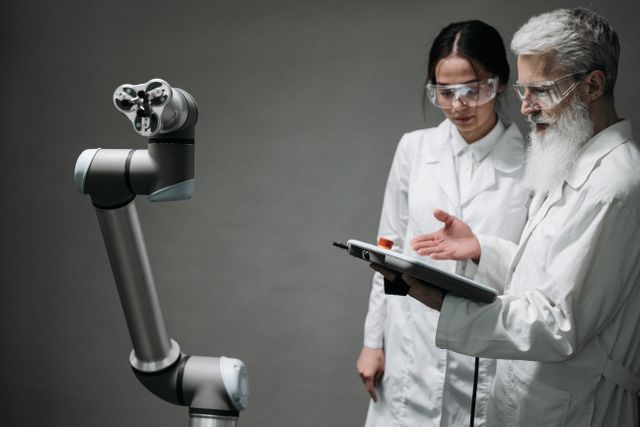

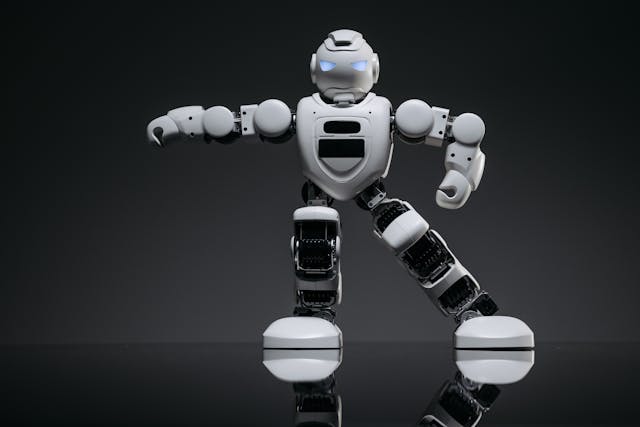
LocoFormer: generalist locomotion via long-context adaptation, how AI learns flexible, adaptive movement across environments.
LocoFormer: generalist locomotion via long-context adaptation is an AI framework that enables robots to move across diverse terrains by learning from long sequences of past experiences rather than fixed rules.
It uses long-context sequence modeling to adapt movement in real time, creating flexible and generalist locomotion.
I remember watching a robot try to walk for the first time.
Not in a lab, but in a late-night scroll session. It stumbled, corrected itself, then stumbled again. There was something strangely familiar about it. Not the mechanics, but the hesitation.
It felt human.
Then I came across something different. A system that didn’t just learn how to walk, but seemed to learn how to adapt to walking itself. That’s where LocoFormer: generalist locomotion via long-context adaptation stopped feeling like just another robotics paper, and started feeling like a shift in how machines understand movement.
Because maybe movement isn’t about perfect steps.
Maybe it’s about memory.
What Is LocoFormer, Really?
At its core, LocoFormer is an AI architecture designed to solve a stubborn problem in robotics: how to make machines move effectively across unpredictable environments.
Traditional locomotion systems are narrow. They’re trained for specific terrains and fail when conditions change. A robot trained on flat ground struggles on gravel. One trained on slopes fails on sand.
LocoFormer challenges that limitation.
It approaches locomotion as a sequence learning problem, where every step is influenced by a long chain of past movements.
It reframes movement as a story
Instead of reacting to the present moment alone, LocoFormer considers:
- What just happened
- What worked a few seconds ago
- What failed earlier
Each movement becomes part of a larger narrative.
“LocoFormer treats locomotion as a memory-driven process, not a reactive one.”
The Core Idea: Long-Context Adaptation
Movement isn’t momentary, it evolves
Think about walking on a slippery road.
The first step surprises you. The second step adjusts. By the third, your body has already recalibrated. You’re no longer reacting, you’re adapting.
LocoFormer mirrors this exact process.
It uses long-context modeling to analyze extended sequences of movement data, allowing it to adjust behavior over time rather than instantly.
How this changes everything
- It learns patterns across time, not isolated actions
- It adapts without restarting or retraining
- It improves continuously during movement
Short fact:
“Long-context adaptation allows locomotion systems to refine behavior mid-task without external intervention.”
Why Generalist Locomotion Matters More Than It Sounds
The phrase “generalist locomotion” might sound technical, but its implications are deeply practical.
Traditional systems are specialists
Most robots today are built like specialists:
- Designed for one environment
- Tuned for one type of movement
- Easily disrupted outside their training
They’re efficient, but fragile.
LocoFormer introduces generalist intelligence
A generalist locomotion system doesn’t need to start from scratch in a new environment.
It carries forward what it has learned.
- Walking on grass informs walking on sand
- Handling slopes informs navigating stairs
- Past failures become future adjustments
“Generalist locomotion reduces retraining by transferring movement intelligence across environments.”
How LocoFormer Works (Explained Simply)
Understanding LocoFormer can feel intimidating at first, but breaking it down helps.
Step 1: Capturing Movement Sequences
The system collects long streams of data:
- Joint angles
- Forces
- Balance shifts
- Environmental feedback
This data isn’t treated as isolated points, it’s stored as sequences.
Almost like sentences.
Step 2: Transformer-Based Processing
LocoFormer uses a transformer-style architecture to process these sequences.
Instead of predicting the next word, it predicts the next movement.
But it does something critical:
It looks far back into the sequence.
Not just the last step. The last many steps.
Step 3: Real-Time Adaptation
As the robot moves, the model updates its decisions continuously.
- If the ground becomes uneven, it adjusts stride
- If balance shifts, it compensates
- If friction changes, it modifies force
No retraining. No manual intervention.
Just adaptation in motion.
The Bigger Shift: From Control to Understanding
There’s a deeper philosophical change happening here.
Older systems were obsessed with control:
- Exact angles
- Precise timing
- Fixed responses
But LocoFormer leans toward understanding patterns over time.
It doesn’t chase perfection.
It embraces flexibility.
Instead of asking, “What’s the correct movement?” it asks, “What makes sense given everything so far?”
That subtle shift changes everything.
Real-World Applications (Where This Gets Real)
Search and Rescue
Disaster zones are unpredictable.
Debris, unstable ground, unexpected obstacles, conditions change constantly. A system that adapts on the fly becomes invaluable.
Space Exploration
You can’t perfectly simulate alien terrain.
But you can build systems that learn how to adapt to it. That’s where generalist locomotion becomes essential.
Prosthetics and Exoskeletons
Human movement isn’t static.
It changes with fatigue, terrain, and even emotion. Adaptive systems could make assistive devices feel more natural and intuitive.
Simulation and Gaming
Even virtual worlds benefit.
More realistic character movement. Less scripted animation. Systems that respond dynamically instead of following predefined paths.
The Trade-Offs No One Talks About Enough
LocoFormer isn’t perfect. And pretending it is would miss the point.
Computational demands
Processing long sequences requires more memory and power. This isn’t lightweight.
Latency concerns
Looking further into the past can slow decision-making. Real-time systems need to balance depth with speed.
Over-reliance on history
Too much focus on past patterns could reduce responsiveness to sudden changes.
The balancing act
Short-context systems are fast but shallow.
Long-context systems are adaptive but heavy.
The real challenge is finding the sweet spot.
And honestly, that’s still an open question.
Comparison: LocoFormer vs Traditional Locomotion Models
| Feature | Traditional Models | LocoFormer |
| Learning Style | Task-specific | Generalist |
| Context Awareness | Short-term | Long-term |
| Adaptability | Low | High |
| Training Needs | Frequent retraining | Transferable learning |
| Real-Time Performance | Faster | Slightly slower |
A Subtle Realization
The more I think about it, the more this stands out:
Movement intelligence isn’t about precision.
It’s about adaptation.
We’ve spent years trying to make robots move perfectly. But maybe perfection was never the goal.
Maybe resilience is.
FAQ
What is LocoFormer in simple terms?
LocoFormer is an AI system that helps robots move across different environments by learning from long sequences of past movements.
Why is long-context adaptation important?
It allows systems to use extended movement history to make better decisions, leading to smoother and more adaptive locomotion.
Is LocoFormer based on transformer models?
Yes, it uses transformer-like architectures to process long sequences of locomotion data.
Can LocoFormer work in real-time applications?
Yes, but it requires balancing computational cost and speed due to its long-context processing.
What makes LocoFormer different from traditional models?
Its ability to generalize across multiple environments without retraining sets it apart.
Key Takings
- LocoFormer: generalist locomotion via long-context adaptation changes how machines learn movement.
- It treats locomotion as a sequence-based, memory-driven process.
- Long-context learning enables real-time adaptation across terrains.
- Generalist locomotion reduces the need for retraining.
- Trade-offs include higher computational cost and latency challenges.
- The shift is from rigid control to flexible understanding.
- Future robotics may prioritize adaptability over precision.
Additional Resources:
- Transformer Models Explained: A foundational overview of sequence models that power systems like LocoFormer and enable long-context learning.