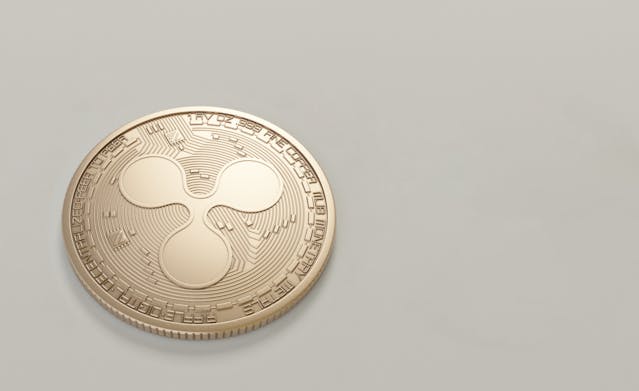

Charles Hoskinson claims XRP operates far beyond traditional finance systems, exploring what this means for crypto and banks.
Charles Hoskinson claims XRP operates far beyond traditional finance systems because it enables fast, borderless transactions without relying on banks or legacy financial infrastructure.
I remember the first time I sent money abroad. Not crypto, just a simple bank transfer.
It took days.
There was no clarity. No real-time update. Just a vague promise that the money was “on the way.” Somewhere between frustration and curiosity, I started asking a question that feels obvious now: why does money still move so slowly in a world where messages travel instantly?
That’s when I came across Charles Hoskinson’s claim that XRP operates far beyond traditional finance systems.
At first, I brushed it off. Crypto people say bold things all the time.
But then I started digging, and the deeper I went, the more it felt like he wasn’t exaggerating. He was describing a system most of us haven’t fully caught up to yet.
What Does “Beyond Traditional Finance” Actually Mean?
When Charles Hoskinson claims XRP operates far beyond traditional finance systems, he’s not just talking about speed.
He’s talking about structure.
The Hidden Layers of Traditional Finance
Traditional finance (TradFi) is built like a maze:
- Banks hold funds
- Intermediaries process transactions
- Clearing houses validate transfers
- Settlement systems finalize everything
Each step adds time.
Each step adds cost.
Each step adds friction.
Traditional cross-border payments often take 2–5 days to settle. That’s not a glitch. That’s how the system was designed decades ago.
XRP’s Alternative Approach
XRP doesn’t try to improve every layer.
It removes most of them.
Instead of relying on institutions, it uses a distributed ledger to move value directly between parties.
Transactions settle in seconds.
Fees are minimal.
And the system doesn’t sleep.
That’s not just faster, it’s fundamentally different.
XRP as a Liquidity Engine
This is where things started to click for me.
XRP isn’t just a digital coin. It’s a bridge between currencies.
How It Works in Practice
Imagine sending money from Pakistan to Europe:
- Convert PKR into XRP
- Send XRP instantly across the network
- Convert XRP into EUR on the receiving end
No waiting.
No chain of banks.
No pre-funded accounts sitting idle.
Why This Changes Everything
Liquidity is one of the biggest challenges in global finance.
Banks typically need to hold money in multiple countries to facilitate transfers. That’s expensive and inefficient.
XRP solves this by enabling on-demand liquidity.
Funds move when needed, no pre-positioning required.
That single idea has massive implications for how money flows globally.
Charles Hoskinson’s Perspective: Why It Matters
Charles Hoskinson isn’t just another voice in crypto.
He’s someone who has helped build foundational blockchain systems.
- Co-founder of Ethereum
- Founder of Cardano
- Deep expertise in decentralized systems
So when he evaluates XRP, he’s not reacting emotionally.
He’s analyzing architecture.
A Nuanced Take
Interestingly, Hoskinson hasn’t always been aligned with the XRP community.
There have been disagreements, debates, and friction over the years.
Which makes his acknowledgment even more meaningful.
He’s not praising XRP out of loyalty.
He’s recognizing its design.
And that distinction matters.
XRP vs Traditional Finance: Side-by-Side
| Feature | Traditional Finance | XRP Network |
| Settlement Time | 2–5 days | 3–5 seconds |
| Intermediaries | Multiple layers | Minimal |
| Fees | High and variable | Low and predictable |
| Accessibility | Limited by banking hours | 24/7 global access |
| Liquidity | Pre-funded accounts | On-demand liquidity |
Looking at this, “far beyond” starts to feel less like a bold claim, and more like a logical conclusion.
Real-World Use Cases: Beyond Theory
It’s easy to dismiss crypto as theoretical.
But XRP has real-world applications.
Institutional Integration
Ripple, the company associated with XRP, has worked with financial institutions to improve cross-border payments.
The goal isn’t just disruption.
It’s efficiency.
A Shift in Trust
Traditional finance operates on institutional trust.
You trust the bank.
You trust the system.
XRP flips that.
You trust the protocol.
The rules are embedded in code, not controlled by a central authority.
That shift changes how we think about money itself.
The Contradiction: Is XRP Really “Beyond” Finance?
At this point, I hit a mental roadblock.
If XRP is working with banks… is it truly beyond traditional finance?
Or is it just upgrading it?
Two Perspectives
1. Disruption Narrative
XRP replaces intermediaries and operates independently of banks.
2. Integration Narrative
XRP enhances existing systems, making them faster and cheaper.
Both perspectives exist at the same time.
And that’s where things get interesting.
A Personal Realization
Maybe “beyond” doesn’t mean separate.
Maybe it means adaptable.
XRP can function within traditional systems, or completely outside them.
That flexibility is what sets it apart.
Regulation: The Elephant in the Room
No matter how advanced a system is, regulation shapes its future.
The Ongoing Debate
Governments and regulators are still figuring out:
- Is XRP a security?
- Is it a currency?
- Is it something entirely new?
This uncertainty slows adoption.
But it also highlights how new this technology really is.
Innovation Moves Faster Than Rules
Financial innovation has always outpaced regulation.
XRP is no exception.
It exists in a space where definitions are still being written.
And that creates both opportunity, and risk.
A Bigger Shift: From Institutions to Protocols
This is where things become less technical and more philosophical.
Traditional finance is built on institutions.
Crypto systems like XRP are built on protocols.
Why That Matters
Institutions rely on trust, reputation, and regulation.
Protocols rely on code, consensus, and transparency.
Institutions can fail.
Protocols just execute.
Consistently.
Without bias.
And suddenly, Hoskinson’s statement starts to feel less like a bold claim, and more like a glimpse into the future of financial systems.
FAQ
What did Charles Hoskinson say about XRP?
He stated that XRP operates beyond traditional finance systems due to its efficiency, speed, and decentralized design.
Is XRP faster than traditional banking systems?
Yes, XRP transactions typically settle in seconds, while traditional systems can take several days.
Does XRP eliminate banks?
Not entirely. It can work alongside banks or operate independently depending on the use case.
Why is XRP important in global finance?
It enables faster, cheaper cross-border payments and reduces the need for pre-funded accounts.
Is XRP widely adopted today?
It is used in certain financial systems, but broader adoption depends on regulation and market acceptance.
Key Takings
- Charles Hoskinson claims XRP operates far beyond traditional finance systems due to its architecture.
- XRP removes intermediaries and enables near-instant global transactions.
- Traditional finance relies on layered systems; XRP simplifies them into a single protocol.
- XRP acts as a liquidity bridge, unlocking capital across borders.
- It can integrate with banks or operate independently, offering unique flexibility.
- Regulatory uncertainty continues to shape its adoption path.
- The shift from institutions to protocols may redefine the future of finance.
Additional Resources
- Bank for International Settlements, Cross-Border Payments Report: Explains inefficiencies in global payment systems and the need for modernization.