

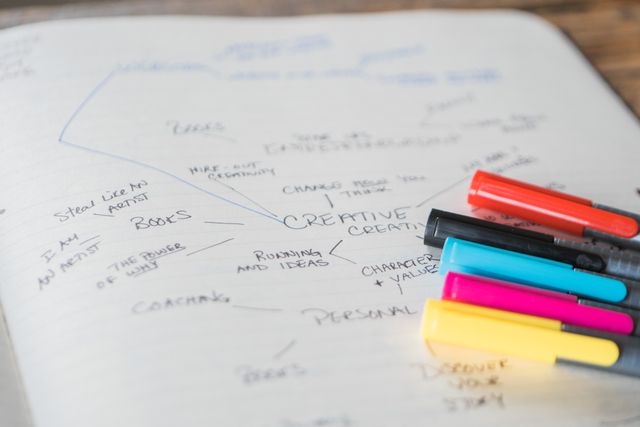
Learn what a concept web is, how it works, and why it helps organize ideas, improve learning, and reveal hidden connections.
A concept web is a visual diagram that shows how ideas, topics, or concepts connect to one another. It places a central idea at the center and branches related concepts outward, making relationships easier to understand, remember, and explore. Concept webs are widely used in education, brainstorming, research, and problem-solving.
I remember staring at pages of notes once, convinced I understood a topic. The facts were there. The definitions were highlighted. The important dates were underlined twice.
Yet something felt missing.
The information sat in neat rows like books on a shelf, but the connections between them remained invisible. Then someone sketched a simple diagram on a whiteboard. One idea in the middle. Related ideas branching outward. Suddenly, everything clicked.
That simple sketch was a concept web.
What’s fascinating is that a concept web doesn’t necessarily add new information. Instead, it changes how information is seen. It transforms isolated facts into a living network of relationships.
And that shift can completely change the way we learn, think, plan, and solve problems.
What Is a Concept Web?
A concept web is a visual learning and thinking tool that displays relationships between ideas through connected concepts. Rather than organizing information in a linear list, it shows how one idea links to another within a larger network.
At its simplest, a concept web contains:
- A central concept
- Related ideas connected to it
- Branches showing relationships
- Additional layers of connected concepts
Think of it as a spider web made of ideas instead of silk.
Every thread represents a relationship. Every intersection represents a concept. Remove one strand, and the structure changes.
That interconnectedness is exactly why concept webs are so powerful.
A Simple Concept Web Example
Imagine the central topic is Climate Change.
Branches might include:
- Greenhouse Gases
- Renewable Energy
- Fossil Fuels
- Weather Patterns
- Carbon Emissions
Each branch can expand further.
Renewable Energy:
- Solar Power
- Wind Energy
- Hydroelectricity
Carbon Emissions:
- Transportation
- Manufacturing
- Agriculture
Instead of reading separate paragraphs about each topic, a learner immediately sees how they relate.
Why Concept Webs Work So Well
Human brains rarely think in straight lines.
We jump between memories, ideas, experiences, questions, and associations. One thought triggers another.
Concept webs mirror that natural process.
Research in learning science has repeatedly shown that visual representations help people organize knowledge, identify relationships, and develop deeper understanding of complex subjects.
They Reveal Hidden Connections
Lists show information.
Concept webs show relationships.
That’s an important difference.
A list may tell you that photosynthesis, sunlight, water, and oxygen are important.
A concept web shows how they influence one another.
They Reduce Cognitive Overload
Complex topics can feel overwhelming when presented as giant blocks of text.
A concept web breaks complexity into manageable pieces.
The mind sees patterns before details.
That’s often how understanding begins.
They Encourage Active Learning
Creating a concept web forces people to ask:
- What belongs here?
- How does this connect?
- Which idea is most important?
- What relationship exists between these concepts?
Those questions transform passive reading into active thinking.
The History Behind the Concept Web
The modern concept mapping approach emerged through the work of educational researcher Joseph D. Novak during the 1970s. His goal was to better understand how students organize knowledge and build meaning from new information.
The idea was influenced by learning theories suggesting that meaningful learning happens when new concepts connect with existing knowledge structures.
That insight remains surprisingly relevant today.
Whether someone is studying biology, planning a business strategy, or designing software, understanding often comes from seeing connections rather than memorizing isolated facts.
Quotable Fact
“Concept mapping was developed in the 1970s as a method for representing and understanding knowledge structures.”
Key Components of a Concept Web
Central Concept
Every concept web starts with a primary idea.
This acts as the anchor point.
Examples include:
- Digital Marketing
- Human Body
- World War II
- Artificial Intelligence
Everything else connects back to this central theme.
Nodes
Nodes represent individual concepts.
These are usually displayed as:
- Circles
- Boxes
- Ovals
Each node contains a word or phrase representing an idea.
Connecting Lines
Lines show relationships.
Without lines, a concept web becomes a collection of disconnected thoughts.
The connections are where meaning emerges.
Relationship Labels
Advanced concept webs often label connections.
Examples include:
- Causes
- Requires
- Includes
- Influences
- Produces
These labels explain precisely how concepts relate.
How to Create a Concept Web
Creating a concept web is surprisingly simple.
Step 1: Choose a Central Topic
Start with a single idea.
Be specific.
Instead of “Science,” use “Renewable Energy.”
Instead of “Business,” use “Customer Retention.”
Clarity creates stronger maps.
Step 2: Brainstorm Related Concepts
List every idea connected to the topic.
Don’t organize yet.
Just collect.
Think of this stage as gathering puzzle pieces.
Step 3: Group Similar Ideas
Look for patterns.
Which concepts naturally belong together?
Clusters often emerge quickly.
Step 4: Draw Connections
Begin linking concepts.
Ask:
- Does this cause that?
- Does this support that?
- Is this part of that?
Every line should represent a meaningful relationship.
Step 5: Expand and Refine
The best concept webs evolve.
New insights create new branches.
Old assumptions may disappear.
The map becomes a living representation of understanding.
Concept Web vs Concept Map
People often use these terms interchangeably.
In practice, they are extremely similar.
However, some educators draw subtle distinctions.
| Feature | Concept Web | Concept Map |
| Structure | Often radial | Often hierarchical |
| Starting Point | Central idea | General concept |
| Complexity | Usually simpler | Can be highly detailed |
| Common Use | Brainstorming | Deep knowledge organization |
| Visual Style | Web-like branches | Structured relationships |
Many experts consider concept webs a variation of concept maps rather than a completely separate tool.
Concept Web vs Mind Map
This comparison creates even more confusion.
At first glance, they look almost identical.
But there is a subtle difference.
Mind Maps Focus on Association
Mind maps prioritize free-flowing ideas.
They’re excellent for brainstorming.
Connections may be intuitive rather than formally defined.
Concept Webs Focus on Relationships
Concept webs emphasize understanding how ideas relate.
The connection itself matters.
Not just the existence of a connection.
Example
Mind Map:
- Business
- Marketing
- Sales
- Finance
Concept Web:
- Marketing generates leads
- Sales converts leads
- Finance measures profitability
The relationships become explicit.
That’s the distinction.
Real-World Uses of Concept Webs
Education
This is perhaps the most common application.
Teachers use concept webs to:
- Introduce new topics
- Assess understanding
- Encourage critical thinking
- Improve retention
Students use them to organize notes and prepare for exams.
Business Strategy
Organizations increasingly use concept webs to understand:
- Customer journeys
- Product ecosystems
- Organizational structures
- Strategic planning
Complex business environments benefit from visual clarity.
Research
Researchers often face information overload.
A concept web helps reveal:
- Relationships between theories
- Research gaps
- Emerging patterns
- Interdisciplinary connections
Writing and Content Creation
Writers often use concept webs before drafting articles, books, and reports.
Instead of forcing ideas into a rigid outline too early, they explore how concepts naturally connect.
Sometimes the most valuable insight appears between two seemingly unrelated branches.
Problem Solving
Many problems appear unsolvable because they are viewed too narrowly.
A concept web widens perspective.
It reveals causes, effects, dependencies, and opportunities.
The Surprising Psychological Power of a Concept Web
Here’s something interesting.
People often believe understanding comes from accumulating information.
Sometimes the opposite is true.
Sometimes understanding comes from reducing information to its essential relationships.
A concept web forces that reduction.
It asks:
“What truly matters here?”
That question is more powerful than it seems.
When people draw concept webs, they stop collecting facts and start building meaning.
The process feels less like filing paperwork and more like discovering the hidden architecture beneath an idea.
Quotable Fact
“Concept webs help transform isolated facts into connected knowledge.”
Benefits of Using a Concept Web
Better Memory Retention
People remember connected information more easily than disconnected information.
A concept web creates mental pathways.
The more pathways that exist, the easier information becomes to recall.
Improved Critical Thinking
Critical thinking depends on recognizing relationships.
Concept webs train the brain to search for patterns, causes, consequences, and dependencies.
Faster Learning
When relationships become visible, learning accelerates.
Instead of memorizing ten separate ideas, learners understand one system.
Enhanced Creativity
Creativity often emerges when unrelated concepts connect in unexpected ways.
A concept web creates opportunities for those connections to appear.
Stronger Communication
Explaining complex topics becomes easier when relationships are visually organized.
Whether teaching, presenting, or writing, clarity improves dramatically.
Common Mistakes When Building a Concept Web
Adding Too Many Concepts
More isn’t always better.
A crowded web becomes visual noise.
Focus on meaningful concepts.
Ignoring Relationships
The lines matter.
If connections aren’t clear, the web loses value.
Using Vague Terms
Words like:
- Things
- Stuff
- Factors
Create confusion.
Specific concepts create understanding.
Treating It as a Decoration
A concept web isn’t artwork.
It’s a thinking tool.
The goal is insight, not aesthetics.
Refusing to Revise
Many people treat their first version as final.
That defeats the purpose.
A concept web should evolve as understanding grows.
Digital Tools for Creating Concept Webs
Modern software has made concept web creation easier than ever.
Popular options include:
- Lucidchart
- Creately
- Miro
- Coggle
- MindMeister
- XMind
- Canva Whiteboards
These platforms allow collaboration, sharing, and real-time editing.
Yet many people still prefer pen and paper.
There’s something surprisingly powerful about drawing connections by hand.
The slower pace often encourages deeper thinking.
Why Concept Webs Matter More in the AI Era
This might sound counterintuitive.
Artificial intelligence can generate information faster than any previous technology.
Yet that abundance creates a new challenge.
Too much information.
Not enough structure.
Knowledge today is less about finding information and more about connecting it.
That’s where concept webs become valuable.
They help people transform endless streams of data into meaningful understanding.
As information becomes increasingly abundant, the ability to connect ideas may become more valuable than the ability to collect them.
A person who understands relationships often outperforms a person who merely remembers facts.
Quotable Fact
“A concept web visualizes relationships between concepts rather than simply listing information.”
FAQ: What Is a Concept Web?
What is a concept web in simple terms?
A concept web is a visual diagram that connects related ideas around a central topic, helping people understand relationships and organize knowledge.
What is the purpose of a concept web?
Its purpose is to make complex information easier to understand by showing how concepts connect and influence one another.
Is a concept web the same as a mind map?
Not exactly. A mind map focuses on associations and brainstorming, while a concept web emphasizes meaningful relationships between ideas.
Who uses concept webs?
Students, teachers, researchers, business professionals, writers, project managers, and strategic planners commonly use concept webs.
What are the main parts of a concept web?
The main parts include a central concept, connected nodes, linking lines, and relationship labels.
Key Takings
- A concept web is a visual tool that shows relationships between ideas.
- It transforms disconnected information into connected understanding.
- Concept webs support learning, planning, research, creativity, and problem-solving.
- The approach emerged from educational research focused on meaningful learning.
- Strong concept webs emphasize relationships, not just concepts.
- They reduce complexity by revealing patterns and structure.
- Understanding what a concept web is can improve the way people learn, think, and communicate.
- In today’s information-rich world, concept webs help turn knowledge into insight.