
Learn how do you calculate your mpg with simple steps, real examples, and tips to track fuel efficiency accurately.
To calculate your MPG (miles per gallon), divide the number of miles driven by the gallons of fuel used.
MPG = Miles ÷ Gallons.
Track your odometer and fuel fill-ups for the most accurate result.
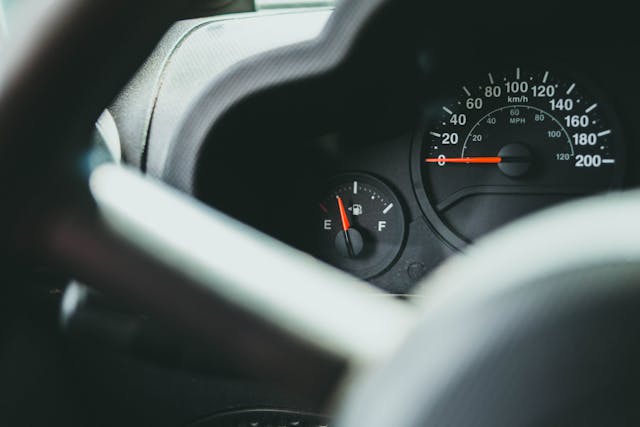
I didn’t care about fuel efficiency, until I noticed my wallet shrinking faster than my fuel gauge.
At first, it felt random. Some weeks I was refueling constantly. Other weeks, it seemed fine. No pattern. Just… confusion.
Then someone casually asked, “What’s your MPG?”
I paused. Because honestly, I had no idea.
That’s where this whole journey started, not as a technical exercise, but as a small attempt to understand where my money was going. And surprisingly, calculating MPG turned out to be less about math… and more about awareness.
What Does MPG Actually Mean?
MPG stands for miles per gallon. It tells you how far your vehicle can travel using one gallon of fuel.
Think of it like this:
- MPG is your car’s “efficiency score”
- Higher MPG = better fuel economy
- Lower MPG = more fuel burned per mile
A typical small car might get 25–35 MPG, while larger SUVs may drop below 20 MPG.
But numbers alone don’t tell the full story. MPG isn’t fixed, it changes based on how, where, and even when you drive.
How Do You Calculate Your MPG Step-by-Step?
At its core, calculating MPG is beautifully simple.
MPG = \frac{\text{Miles Driven}}{\text{Gallons Used}}
But applying it in real life requires a bit of attention.
Step 1: Fill Your Tank Completely
Start with a full tank. This is your baseline.
Reset your trip meter (or note your odometer reading).
This moment matters more than it seems, it’s your “starting line.”
Step 2: Drive Normally
Don’t try to drive differently just yet.
Drive like you always do, commuting, errands, late-night cravings. This keeps your MPG realistic.
Step 3: Refill Your Tank
Once your tank is near empty, fill it up again.
Take note of:
- How many gallons you added
- How many miles you drove since the last fill-up
Step 4: Do the Calculation
Divide miles driven by gallons used.
Example:
- Miles driven = 300
- Gallons used = 10
MPG = 300 ÷ 10 = 30 MPG
That’s it. No fancy tools. Just awareness and consistency.
An Example (Because Numbers Feel Abstract)
Let’s say your weekly routine looks like this:
- Work commute: 20 miles/day
- Weekend trips: 60 miles
- Total weekly distance: ~200 miles
You refill your tank and it takes 8 gallons.
Your MPG = 200 ÷ 8 = 25 MPG
Suddenly, your driving habits aren’t invisible anymore. They have shape. And cost.
Why Your MPG Isn’t Always Consistent
Here’s something I didn’t expect: MPG isn’t stable.
It fluctuates. A lot.
Driving Style Matters More Than You Think
Aggressive acceleration burns more fuel.
Smooth driving? It stretches every drop.
Rapid acceleration can reduce MPG by up to 30%.
City vs Highway Driving
- City driving = more stops, lower MPG
- Highway driving = steady speed, higher MPG
It’s like walking through a crowded market versus an empty road. One drains you faster.
Weather and Conditions
Cold weather reduces fuel efficiency.
Air conditioning increases fuel consumption.
Even tire pressure plays a role.
Underinflated tires can lower MPG by around 3%.
Manual vs Car Display MPG: Which One Is Accurate?
Modern cars often show MPG on the dashboard.
Convenient? Yes.
Accurate? Not always.
Manual Calculation
- More accurate
- Based on real fuel usage
- Slightly more effort
Car Display
- Instant feedback
- May be slightly optimistic
- Depends on sensors and algorithms
Manual calculations tend to be more reliable over time.
But the dashboard still helps you notice trends in real time.
MPG vs Other Fuel Economy Metrics
Not every country uses MPG.
Some use:
- Liters per 100 kilometers (L/100km)
- Kilometers per liter (km/L)
Quick Comparison
| Metric | Meaning | Better Value |
| MPG | Miles per gallon | Higher |
| km/L | Kilometers per liter | Higher |
| L/100km | Liters used per 100 km | Lower |
It’s like measuring speed in mph vs km/h, different units, same idea.
Common Mistakes When Calculating MPG
I made a few of these myself.
Not Filling the Tank Fully
Partial fills distort your numbers.
Consistency matters more than precision.
Forgetting to Reset the Trip Meter
Without a clear starting point, your calculation becomes guesswork.
Relying on One Calculation Only
MPG should be averaged over time.
One trip doesn’t define your car’s efficiency.
How to Improve Your MPG (Without Buying a New Car)
Improving MPG isn’t about big changes, it’s about small habits.
Drive Smoothly
Avoid sudden acceleration and braking.
Think of your car like a glass of water, don’t shake it unnecessarily.
Maintain Tire Pressure
Check your tires regularly.
It’s one of the easiest ways to improve fuel efficiency.
Reduce Extra Weight
Carrying unnecessary items reduces MPG.
Even small weight adds up over time.
Use Cruise Control on Highways
Maintains steady speed and improves efficiency.
Consistency beats bursts of speed.
The Hidden Cost of Ignoring MPG
At first, MPG feels like a technical detail.
But it’s not.
It’s financial.
It’s environmental.
It’s behavioral.
If your MPG drops from 30 to 20, you’re using 50% more fuel for the same distance.
That’s not just inefficiency, it’s loss.
FAQ
What is a good MPG for a car?
A good MPG typically ranges between 25–35 for standard vehicles. Smaller cars often achieve higher efficiency.
How often should I calculate my MPG?
Ideally, calculate it every time you refill your tank to track trends accurately.
Does idling affect MPG?
Yes. Idling consumes fuel without covering distance, reducing overall MPG.
Can bad driving habits lower MPG?
Absolutely. Aggressive driving can reduce MPG significantly.
Is highway MPG always better than city MPG?
Generally, yes. Highway driving allows steady speeds, which improves fuel efficiency.
Key Takings
- MPG measures how efficiently your car uses fuel over distance.
- To calculate MPG, divide miles driven by gallons used.
- Real-world MPG changes based on driving habits, conditions, and maintenance.
- Manual calculations are often more accurate than dashboard readings.
- Small habits like smooth driving and proper tire pressure can improve MPG.
- Tracking MPG regularly turns guesswork into clarity.
- Understanding how do you calculate your mpg helps you save money and fuel long-term.
Additional Resources:
- Fuel Economy Tools and Comparison Platforms: Fuel economy tools and comparison platforms can help you estimate your vehicle’s efficiency and track improvements over time.