
What is a NFC tag? Discover how these tiny chips power contactless payments, smart homes, and instant data sharing.
A NFC tag is a small wireless chip that stores data and communicates with nearby devices using near-field communication. You tap your phone to it, and it instantly triggers an action, like opening a link or making a payment.
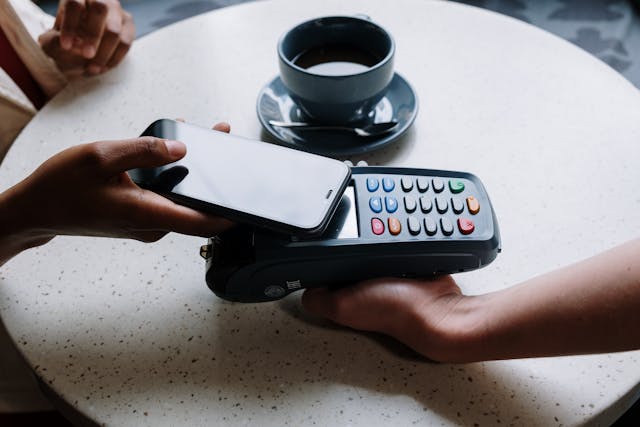
The first time I tapped my phone to pay, I didn’t think about what was happening. It’s just… worked. No cables, no pairing, no waiting. A soft beep, and suddenly the transaction was done.
It felt like magic, but the kind that’s hiding in plain sight.
Later, I started noticing those little symbols everywhere, on posters, payment terminals, even business cards. That’s when the question finally surfaced in my mind: what is a NFC tag, really?
And honestly, the answer isn’t just technical. It’s strangely human. It’s about speed, simplicity, and removing friction from everyday moments. The more I dug into it, the more I realized this tiny chip is quietly reshaping how we interact with the world.
What Is a NFC Tag, Really?
At its core, a NFC tag is a tiny microchip paired with an antenna. It stores small bits of information and communicates wirelessly when a compatible device comes close, usually within a few centimeters.
Think of it like a digital sticky note.
Except instead of reading it with your eyes, your phone reads it instantly.
According to NFC standards, communication happens within about 4 cm or less. That short range is intentional, it makes the interaction secure and deliberate.
Here’s the simple version:
- You bring your phone close
- The NFC tag sends its data
- Your phone reacts instantly
No tapping buttons. No scanning QR codes. Just proximity.
And that’s the part that feels almost invisible.
How NFC Tags Actually Work (Without the Jargon)
The “Tap” Is a Conversation
When your phone gets close to a NFC tag, they start a quick exchange.
The tag doesn’t even need its own power source.
It wakes up using energy from your phone.
That surprised me the most.
It’s like knocking on a door and the house builds itself just long enough to answer you.
Three Key Pieces Make It Happen
1. The Chip
Stores data, like a URL, contact info, or command.
2. The Antenna
Lets the chip communicate wirelessly.
3. The Reader (Your Phone)
Interprets the data and decides what to do.
“NFC tags are passive devices that rely on external power from the reader.”
Examples That Suddenly Make Sense
Once you understand what a NFC tag is, you start spotting it everywhere.
Contactless Payments
You tap your phone or card, and the payment goes through instantly.
Smart Posters
Imagine walking past a concert poster. You tap your phone, and it opens the ticket page immediately.
No typing. No searching.
Just intention → action.
Business Cards (The Quiet Upgrade)
Some modern cards have NFC tags embedded.
Instead of handing someone paper, you hand them a moment.
They tap, and your contact details appear.
Smart Homes
You can place NFC tags around your house:
- Tap near your bed → lights turn off
- Tap in your car → GPS opens
- Tap at your desk → Wi-Fi connects
It feels like creating shortcuts for real life.
Why NFC Tags Feel Different From Other Tech
At first, I thought NFC tags were just another version of QR codes.
But that’s not quite right.
QR codes require effort. You open a camera. You aim. You wait.
NFC removes all of that.
It’s almost invisible.
“NFC interactions require no manual input beyond proximity.”
But here’s the contradiction:
That same simplicity can make it feel less noticeable, almost underappreciated.
We tend to value what we see working. NFC works quietly.
NFC Tags vs QR Codes vs Bluetooth
| Feature | NFC Tags | QR Codes | Bluetooth |
| Interaction | Tap (very close) | Scan with camera | Pair/connect |
| Speed | Instant | Slight delay | Slower setup |
| Power Needed | No (passive) | No | Yes |
| Range | Few centimeters | Visual range | Up to meters |
| Ease of Use | Very high | Medium | Lower |
NFC feels like the most “effortless” option, but only when the user knows it’s there.
And that’s the catch.
Types of NFC Tags (Yes, There Are Different Kinds)
I didn’t expect this part to matter, but it actually does.
Type 1 to Type 5 Tags
Different NFC tags have different capabilities:
- Storage size
- Speed
- Security features
For example:
- Simple tags store small data (like a URL)
- Advanced tags can handle encryption and secure transactions
Most consumer NFC tags store between 48 bytes and several kilobytes, which is enough for common tasks like links or commands.
Are NFC Tags Safe?
This is where hesitation usually kicks in.
If all it takes is a tap… what stops someone from misusing it?
The Reality
NFC is generally considered secure because:
- It requires close proximity
- It often uses encryption
- It needs intentional interaction
The Risk
A malicious NFC tag could:
- Redirect you to a harmful website
- Trigger unwanted actions
That’s why phones usually ask for confirmation before doing anything sensitive.
So yes, it’s safe, but not blindly so.
How People Are Using NFC Tags Creatively
This is where things get interesting.
Because once you stop thinking of NFC as “just tech,” it becomes a tool for shaping experiences.
Marketing That Feels Effortless
Brands use NFC tags to:
- Launch product pages
- Share promotions
- Create interactive packaging
Personal Productivity Hacks
People stick NFC tags:
- On their desks → opens work apps
- On their gym bag → starts a workout playlist
Travel & Navigation
Tap a tag at a hotel entrance, and you get:
- Wi-Fi details
- Local guides
- Room access (in some cases)
It’s not about complexity.
It’s about removing tiny frictions.
The Hidden Limitation Nobody Talks About
Here’s something I didn’t expect.
NFC tags are powerful, but only when people know to use them.
And often… they don’t.
You can place a perfectly functional NFC tag somewhere, and it might go completely unnoticed.
Unlike QR codes, there’s no visible cue unless you add one.
So the real challenge isn’t technology.
It’s awareness.
FAQ: Quick Answers About NFC Tags
What is a NFC tag used for?
A NFC tag is used to store and transmit small data wirelessly, often triggering actions like opening links or making payments.
Do all phones support NFC tags?
Most modern smartphones support NFC, but it may need to be enabled in settings.
Can NFC tags be rewritten?
Yes, many NFC tags are rewritable unless they are locked for security purposes.
Do NFC tags need batteries?
No, they are passive and draw power from the device reading them.
Is NFC better than QR codes?
It depends. NFC is faster and easier, but QR codes are more visible and widely recognized.
Key Takings
- A NFC tag is a small, passive chip that communicates wirelessly at close range.
- It works instantly, no apps or scanning required, just proximity.
- NFC powers everyday tools like contactless payments and smart automation.
- Compared to QR codes, NFC is faster but less visible.
- Security is strong due to short range, but awareness still matters.
- The real power of NFC lies in reducing friction in everyday actions.
- Most people use NFC daily without even realizing it.
Additional Resources:
- NFC Technology: Learn how NFC technology is designed and implemented across industries.