
DJI Mini 3 Pro still packs serious aerial imaging into a tiny body. See what it does well, and where it now falls short.
The DJI Mini 3 Pro is still a highly capable compact camera drone, especially for travel, photography, social content and first-time pilots. Its 1/1.3-inch camera, 4K/60fps video, true vertical shooting and sub-249g design remain genuinely useful, but newer models such as the Mini 4 Pro offer better obstacle sensing, video transmission and intelligent flight features.
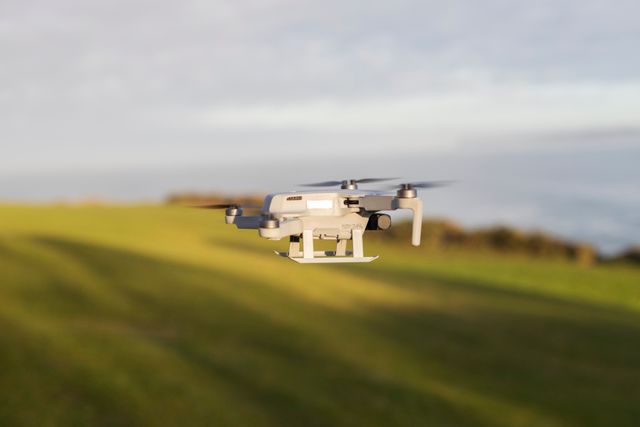
There is something slightly absurd about the DJI Mini 3 Pro. Folded up, it looks like something you could forget in a jacket pocket. Unfold it, and you have a stabilized camera capable of 4K video, RAW stills and automated subject tracking.
That combination is why the DJI Mini 3 Pro has aged better than many drones from its generation. It launched in 2022, yet its camera and portability still make sense for travelers, creators and anyone who wants serious aerial footage without carrying a much larger aircraft.
The interesting question in 2026 is no longer whether it was a good drone. It clearly was. The better question is whether its advantages still outweigh the compromises when newer DJI models exist.
What Makes the DJI Mini 3 Pro Special?
The Mini 3 Pro was designed around a deceptively difficult target: keep the aircraft below 249 grams without stripping away the features photographers actually care about.
DJI achieved that with a 1/1.3-inch CMOS sensor, an f/1.7 lens, up to 48MP stills, 4K/60fps video and a gimbal that physically rotates 90 degrees for vertical shooting. The camera also supports D-Cinelike, RAW stills and HDR video at frame rates up to 30fps.
The Mini 3 Pro’s biggest achievement is not its size; it is how little camera capability you sacrifice to get that size.
That matters in real life. A drone that weighs less and folds down quickly is much more likely to come with you on a weekend trip than a larger camera drone sitting at home because packing it feels like a project.
The camera is still the headline feature
The 1/1.3-inch sensor is considerably larger than the sensor used in older entry-level Mini models, while the bright f/1.7 aperture helps when daylight starts disappearing. DJI also uses dual native ISO technology, which contributes to its strong low-light performance for such a small aircraft.
The 48MP mode deserves one clarification, though: more megapixels do not automatically mean better photographs. The drone’s standard 12MP mode can be preferable when you want the best balance of dynamic range, processing and everyday usability, while 48MP is useful when conditions are good and you need additional detail.
Video is arguably where the Mini 3 Pro feels most modern. It can record 4K at up to 60fps, while D-Cinelike gives experienced editors more flexibility than a heavily processed consumer profile.
True vertical shooting is more useful than it sounds
Instead of recording a landscape image and cropping it into a vertical clip later, the Mini 3 Pro rotates the camera itself.
That is particularly useful for real estate reels, travel clips, Shorts, TikTok-style videos and portrait-oriented social footage. You retain the vertical composition at capture rather than throwing away a large part of the original frame.
How Good Is the Flight Experience?
The Mini 3 Pro uses forward, backward and downward vision sensors, giving it tri-directional obstacle sensing. Those sensors support APAS 4.0 and FocusTrack features such as ActiveTrack, Spotlight and Point of Interest.
That makes it substantially more forgiving than a drone with no obstacle sensing. But “obstacle avoidance” should never be interpreted as “the drone cannot crash.”
There are no side-facing vision sensors, so a tree branch approaching from the side is not magically detected. Thin wires, poor lighting and complicated environments can also defeat vision systems.
Obstacle sensing is a safety net, not a substitute for line-of-sight flying and active piloting.
This distinction becomes especially important with ActiveTrack. DJI specifies operating ranges for tracking people, vehicles and boats, and its own support documentation notes that inadequate lighting, fast subject movement and confusing nearby objects can cause tracking failures.
What the Mini 3 Pro does not have
One of the more useful facts is what is missing.
The Mini 3 Pro does not support waypoint flight or route planning, and it has no internal storage. DJI also says it does not support AirSense.
For casual pilots, those omissions may barely matter. For someone trying to repeat the exact same cinematic camera movement every week, they matter much more.
DJI Mini 3 Pro Flight Time and Battery Choice
DJI rates the standard Intelligent Flight Battery for up to 34 minutes of flight time under controlled test conditions. The optional Intelligent Flight Battery Plus raises the quoted maximum to 47 minutes, although the larger battery increases the aircraft’s weight beyond the sub-249g threshold and is only available in selected markets.
That creates an important trade-off.
With the standard battery, you preserve the lightweight advantage that helped make the Mini series so attractive. With the Plus battery, you get considerably more endurance but lose the headline weight benefit that motivated many buyers in the first place.
Real-world flight time will also be shorter than the laboratory maximum because wind, acceleration, temperature, return-to-home reserves and aggressive flying all consume battery.
For serious shooting, carrying multiple standard batteries is often a more flexible solution than relying on one oversized battery.
DJI Mini 3 Pro vs Mini 3 vs Mini 4 Pro
The three drones occupy similar territory, but their priorities are different.
| Feature | DJI Mini 3 Pro | DJI Mini 3 | DJI Mini 4 Pro |
| Weight | Under 249g with standard battery | Under 249g with standard battery | Under 249g |
| Main sensor | 1/1.3-inch | 1/1.3-inch | 1/1.3-inch |
| Max photo resolution | 48MP | 48MP | 48MP |
| Max video | 4K/60fps | 4K/30fps | 4K/60fps HDR |
| Obstacle sensing | Forward, backward, downward | None | Omnidirectional |
| Vertical shooting | Yes | Yes | Yes |
| Subject tracking | Yes | No | Yes, ActiveTrack 360 |
| Waypoint Flight | No | No | Yes |
| Transmission | DJI O3 | Older system | DJI O4 |
| Internal storage | No | No | No |
The Mini 3 is the value-oriented option if you are comfortable piloting without collision sensors. The Mini 3 Pro is the more attractive middle ground when camera capability and obstacle sensing matter.
The Mini 4 Pro is the technological upgrade: it adds omnidirectional sensing, O4 transmission, 4K/60 HDR, 10-bit D-Log M and HLG options, Waypoint Flight, Advanced RTH and newer tracking features while retaining the sub-249g design.
In other words, the Mini 3 Pro has not become bad. Its newer sibling simply makes the compromises easier to see.
Is the DJI Mini 3 Pro Still Worth Buying?
For a new purchase, the answer depends heavily on the price difference between the Mini 3 Pro and newer alternatives.
If you find a well-maintained Mini 3 Pro at a substantial discount, its core camera system remains compelling. Recent owner discussions in 2026 still describe it as a capable travel and photography drone, while repeatedly mentioning its compactness, image quality and vertical shooting as strengths. Wind performance and the older O3 system are more common complaints.
A new buyer should think less about the age of the model and more about the job.
Buy the Mini 3 Pro if you care most about
The strongest case is portability plus image quality. It makes particular sense for travelers, photographers, social creators and beginners who want some obstacle sensing without moving into a larger drone.
It is also a strong used-market option when you can verify the aircraft’s history and get several batteries, the right controller and accessories for a sensible price.
Choose a newer model when safety and automation matter more
The Mini 4 Pro’s omnidirectional sensing is a meaningful upgrade rather than a cosmetic one. So are O4 transmission, newer tracking and waypoint functionality.
If you routinely fly around structures, trees or moving subjects, or you depend on automated repeatable shots, those features can justify spending more.
What Should You Check Before Buying a Used Mini 3 Pro?
A used drone should be inspected more like a camera body than a smartphone.
First, examine the arms, hinges, gimbal and propellers for impact damage. Then power it on and check the camera for smooth gimbal movement, lens damage, focus behavior and clean footage.
Battery health matters just as much. DJI specifies the standard battery as a 2,453mAh Li-ion pack and the Plus version as 3,850mAh; look for swollen batteries, unusually fast discharge or charging problems rather than judging battery condition purely by appearance.
The controller is worth checking too. The DJI RC has a built-in 5.5-inch display and uses O3 with the Mini 3 Pro, while the RC-N1 requires a compatible smartphone.
Finally, confirm the firmware situation and accessory compatibility. DJI still provides a dedicated Mini 3 Pro download center, including its user manual and firmware release information.
The Weight Myth You Should Avoid
“Under 250 grams” does not mean “no drone rules.”
That is one of the easiest mistakes for new pilots to make.
In the United States, the FAA says recreational drones weighing 250 grams or more must be registered, while recreational flyers also have to complete the free TRUST test and follow applicable airspace rules.
European rules are different. EASA’s framework also treats sub-250g drones differently, but operator registration can still apply to camera-equipped drones that are not toys. Local restrictions, airspace zones and national requirements still matter.
So treat 249g as an important regulatory threshold, not a universal permission slip.
Common DJI Mini 3 Pro Mistakes
Treating the advertised range as a target
DJI’s transmission figures are controlled-environment maximums, not an instruction to fly kilometers away. The Mini 3 Pro uses O3, with DJI listing up to 12 km under FCC conditions and 8 km under CE/SRRC/MIC conditions for the DJI RC connection.
Your legal flight area, visibility, interference, terrain and safe return distance matter much more than the headline number.
Assuming ActiveTrack can fly itself out of trouble
It cannot. A tracking system can lose a subject or behave differently in difficult lighting and cluttered environments.
Flying over water casually
DJI does not recommend flying the Mini 3 Pro within 10 meters above water. Losing a drone over a lake or ocean is an expensive lesson in the difference between “weather-resistant” and “recoverable.”
FAQ
Is the DJI Mini 3 Pro good for beginners?
Yes. Its small size, stabilized camera, automatic flight features and forward/backward/downward sensing make it considerably more approachable than a fully manual beginner drone. New pilots should still learn basic flight skills before relying on automated modes.
Does DJI Mini 3 Pro shoot vertical video?
Yes. Its gimbal physically rotates 90 degrees to provide True Vertical Shooting, allowing portrait-oriented photos and video without simply cropping a landscape recording.
Can DJI Mini 3 Pro follow a person?
Yes. Its FocusTrack system includes ActiveTrack, Spotlight and Point of Interest. Tracking performance depends on the subject, lighting, distance and surroundings.
Does DJI Mini 3 Pro have obstacle avoidance?
It has forward, backward and downward vision sensing with APAS 4.0. It does not provide the omnidirectional obstacle sensing found on the Mini 4 Pro.
Is DJI Mini 3 Pro waterproof?
No. DJI advises avoiding water and recommends landing and drying the aircraft if it becomes exposed to rain.
Key Takeaways
- DJI Mini 3 Pro remains a capable compact camera drone in 2026, particularly when bought at the right price.
- Its 1/1.3-inch sensor, f/1.7 lens, 48MP stills and 4K/60fps video remain strong for travel and creator work.
- True Vertical Shooting is a genuinely useful advantage for portrait-oriented social content.
- Its obstacle sensing covers forward, backward and downward directions, not every side of the aircraft.
- The standard battery is rated for 34 minutes, while the Plus battery reaches 47 minutes but pushes the aircraft beyond the lightweight threshold.
- The biggest reasons to step up to the Mini 4 Pro are omnidirectional sensing, O4 transmission, newer tracking and waypoint capabilities.
- Being under 250g can simplify some regulatory requirements, but local drone laws still apply.
Additional Resources
- FAA Recreational Flyers & Community-Based Organizations: A useful starting point for U.S. recreational drone requirements, registration thresholds, TRUST and airspace responsibilities.