

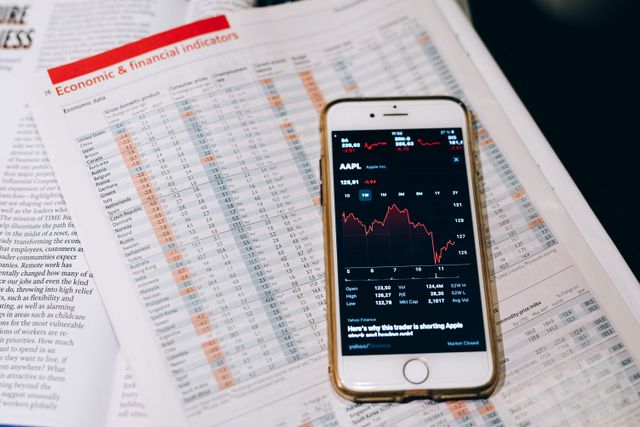
Discover fintech dashboard design patterns 2025, including AI-driven UX, trust-building layouts, and smarter financial data experiences.
Fintech dashboard design patterns 2025 focus on clarity, trust, personalization, and intelligent data presentation. Modern financial dashboards are evolving beyond static charts into adaptive interfaces that help users understand, predict, and act on financial information with greater confidence and less friction.
A few years ago, most financial dashboards felt like airplane cockpits designed by accountants.
Numbers crowded every corner. Tiny charts competed for attention. Menus nested inside menus hid important information behind layers of clicks. The assumption seemed straightforward: more data equals more value.
But somewhere along the way, users began pushing back.
Not loudly. Not dramatically.
They simply stopped engaging with complexity.
A person checking their savings account during a coffee break doesn’t want thirty different metrics. They want reassurance that they’re on track. A startup founder reviewing cash flow doesn’t need a dashboard packed with widgets. They need answers.
That shift is what makes fintech dashboard design patterns 2025 so interesting.
The conversation is no longer about displaying financial information. It’s about transforming complexity into clarity.
The best fintech products today behave less like reporting tools and more like intelligent guides. They know when to speak. They know when to stay quiet. They surface the right insight at the right time.
In many ways, modern dashboard design has become an exercise in empathy.
And that may be the most important trend of all.
Understanding Fintech Dashboard Design Patterns 2025
At its foundation, fintech dashboard design patterns 2025 revolve around a simple idea:
Financial information should feel actionable rather than intimidating.
It sounds obvious.
Yet many financial platforms still prioritize data density over user understanding.
Modern fintech experiences are moving toward:
- Personalized user journeys
- AI-assisted recommendations
- Contextual insights
- Trust-focused interfaces
- Predictive analytics
- Goal-oriented experiences
The shift reflects a deeper realization.
Users rarely visit financial apps because they enjoy looking at data.
They visit because they want confidence.
Confidence that they’re saving enough.
Confidence that investments are performing.
Confidence that tomorrow’s financial decisions will be better than yesterday’s.
The dashboard has become the bridge between uncertainty and confidence.
The Rise of Adaptive Dashboards
Why Static Dashboards Are Becoming Obsolete
Imagine entering a bookstore where every customer sees the exact same recommendations.
A university professor.
A teenage fantasy reader.
A parent shopping for educational books.
Everyone gets the same display.
That would feel ridiculous.
Yet for years, financial dashboards operated exactly this way.
Every user received identical layouts regardless of their goals, experience level, or financial situation.
Adaptive dashboards challenge that model.
Instead of displaying information uniformly, modern systems reorganize themselves around user behavior.
Key Characteristics of Adaptive Dashboards
Adaptive dashboards often respond to:
- Spending patterns
- Investment activity
- Savings goals
- Financial literacy
- Risk tolerance
- Recent account behavior
The result feels less like software and more like a personalized experience.
A first-time investor might see educational content, simplified performance indicators, and risk explanations.
An experienced portfolio manager might immediately see market exposure, sector allocations, and advanced analytics.
Same platform.
Different experience.
That distinction is becoming a competitive advantage.
Quotable Insight
“Personalization isn’t about showing different screens. It’s about showing different priorities.”
Trust-Centered Design Is Becoming the Competitive Edge
Money creates emotional reactions.
People may describe financial decisions as logical, but emotions sit beneath nearly every transaction.
Fear.
Hope.
Stress.
Optimism.
Because of this, trust has become one of the most valuable assets in dashboard design.
Trust Begins With Visual Clarity
Users often decide whether a platform feels trustworthy within seconds.
The visual presentation matters more than many companies realize.
Trust-centered dashboards prioritize:
Clear Hierarchy
Important information appears first.
Secondary information supports rather than distracts.
Users shouldn’t have to search for critical financial data.
Consistency
Buttons behave predictably.
Navigation remains stable.
Interactions feel familiar.
Consistency reduces uncertainty.
And reducing uncertainty increases trust.
Transparency
Users increasingly expect systems to explain themselves.
If an algorithm recommends a savings goal, users want to know why.
If a dashboard forecasts cash flow, users want to understand the assumptions behind the prediction.
Mystery creates doubt.
Transparency creates confidence.
The Emerging Principle
The best fintech dashboards don’t just show answers.
They explain how those answers were created.
Data Visualization Is Becoming Financial Storytelling
For years, dashboards treated charts like decorative objects.
A line graph here.
A pie chart there.
The assumption was that visualization automatically created understanding.
It doesn’t.
Modern fintech design recognizes that visualization is valuable only when it creates meaning.
Moving Beyond Data Displays
Users don’t care about graphs.
They care about what graphs mean.
A spending chart isn’t useful because it exists.
It’s useful because it answers a question.
Questions like:
- Where is my money going?
- Why are expenses increasing?
- Am I improving financially?
- What should I focus on next?
When dashboards answer those questions, data becomes insight.
Emerging Visualization Patterns
Progress-Based Design
Instead of simply displaying balances, dashboards increasingly visualize progress.
Savings goals become journeys.
Debt reduction becomes momentum.
Investment growth becomes a story.
Humans naturally connect with progress.
Numbers alone rarely inspire action.
Progress does.
Contextual Visualization
Not every chart deserves permanent visibility.
Modern dashboards increasingly display visualizations only when they are relevant.
This reduces clutter and improves focus.
Insight-Led Analytics
Instead of asking users to interpret graphs, systems provide interpretation.
For example:
“Your transportation expenses increased 12% compared to last month.”
That single sentence often creates more value than a complicated chart.
Quotable Insight
“The purpose of a chart is not to display data. The purpose of a chart is to create understanding.”
AI-Native Dashboard Experiences
One of the defining fintech dashboard design patterns 2025 is the rise of AI-native interfaces.
This isn’t about adding chatbots to existing dashboards.
It’s about redesigning the entire experience around intelligent assistance.
What AI Changes
Traditional dashboards wait for users to ask questions.
AI-native dashboards anticipate questions before they arise.
Examples include:
- Predictive cash flow forecasting
- Automated budget optimization
- Spending anomaly detection
- Savings recommendations
- Investment guidance
- Financial goal forecasting
The dashboard shifts from passive observer to active assistant.
The Human Challenge
There is an interesting contradiction here.
The smarter systems become, the more important transparency becomes.
Users don’t automatically trust AI recommendations.
In fact, excessive automation can reduce trust if explanations are missing.
The most successful platforms balance:
- Automation
- User control
- Explainability
Not one at the expense of another.
Designing for Explainable Intelligence
Users increasingly ask:
- Why was this recommendation made?
- What factors influenced this prediction?
- How accurate is this forecast?
The future belongs to systems that answer those questions clearly.
Goal-Centered Dashboard Architecture
Historically, dashboards were organized around features.
Users saw:
- Accounts
- Transactions
- Reports
- Investments
Each existed as its own category.
Modern fintech experiences are shifting toward goals.
Instead of organizing around product features, dashboards increasingly organize around user outcomes.
Examples include:
- Build an emergency fund
- Save for retirement
- Eliminate debt
- Improve cash flow
- Grow investments
This sounds subtle.
It’s actually transformational.
Users care far more about goals than features.
The dashboard becomes a roadmap rather than a toolbox.
Mobile-First Is No Longer Enough
For years, mobile-first design dominated product conversations.
Today, it is simply expected.
The new challenge is context-first design.
Understanding Context
A user checking their finances while standing in line at a grocery store has different needs than someone reviewing investments at a desktop workstation.
The screen size matters.
But context matters more.
Modern dashboards increasingly adapt based on:
- Device type
- User location
- Time of day
- Financial activity
- Market conditions
The result is an experience that feels responsive not only to screens but to situations.
Quotable Insight
“The best dashboard isn’t the one that shows everything. It’s the one that knows what to hide.”
Open Banking and Unified Financial Experiences
As financial ecosystems become more connected, dashboards are evolving into central command centers.
Users increasingly link:
- Bank accounts
- Credit cards
- Loans
- Investments
- Digital wallets
into a single interface.
The Challenge of Aggregation
More connections create more complexity.
Users gain visibility.
But they also inherit more permissions, settings, and privacy considerations.
Emerging Design Patterns
Permission Transparency
Users want clear explanations regarding:
- What data is collected
- Why data is needed
- How information is used
Consent Management
Permission controls are becoming dashboard features rather than hidden settings.
Data Ownership Visibility
Modern users expect greater control over financial information.
They want the ability to review, modify, and revoke permissions easily.
The era of hidden consent screens is fading.
Emotional Design in Financial Products
Financial dashboards influence emotions whether designers intend them to or not.
Colors matter.
Spacing matters.
Typography matters.
Information density matters.
Different Financial Activities Require Different Emotional States
Wealth Management Platforms
These experiences often emphasize calmness and stability.
Users want reassurance.
Trading Applications
These environments prioritize speed, awareness, and responsiveness.
Users want control.
Budgeting Tools
These products benefit from approachable, encouraging interfaces.
Users want progress.
The most sophisticated fintech companies now design emotional experiences intentionally.
They understand that financial behavior is deeply connected to emotional perception.
Minimalism Is Making a Comeback
Ironically, as technology becomes more advanced, successful dashboards are becoming simpler.
Not weaker.
Simpler.
There is a difference.
Why Simplicity Wins
Financial decisions already require mental effort.
Users shouldn’t spend additional energy deciphering interfaces.
Complexity should exist behind the scenes.
Not on the screen.
The strongest fintech dashboards increasingly embrace a powerful philosophy:
Show less. Explain more.
This approach reduces cognitive load while improving confidence.
And confidence remains one of the most valuable outcomes a financial product can deliver.
Comparison: Dashboard Design Evolution
| Design Element | Traditional Dashboard | 2025 Dashboard Pattern |
| Data Display | Static reports | Dynamic insights |
| Personalization | Limited | Behavioral adaptation |
| Navigation | Feature-focused | Goal-focused |
| AI Usage | Optional add-on | Core experience |
| Analytics | Historical reporting | Predictive guidance |
| User Role | Observer | Decision-maker |
| Trust Signals | Security badges | Transparency and explainability |
| Layout Strategy | Fixed structure | Adaptive experience |
| Information Density | High | Intentional simplicity |
The Future Beyond 2025
Looking ahead, fintech dashboards will likely become even more proactive.
Interfaces may evolve from displaying financial information to orchestrating financial outcomes.
Imagine dashboards that:
- Anticipate future expenses
- Recommend investment adjustments automatically
- Identify opportunities before users search for them
- Adapt interfaces continuously based on behavior
The dashboard may eventually disappear as a destination.
Instead, financial intelligence could become embedded throughout daily digital experiences.
The screen becomes less important.
The insight becomes everything.
FAQ
What are fintech dashboard design patterns 2025?
They are modern user experience and interface strategies that prioritize personalization, trust, AI assistance, predictive insights, and goal-focused financial management.
Why are adaptive dashboards important?
Adaptive dashboards tailor information based on user behavior, financial goals, and preferences, creating more relevant and actionable experiences.
How is artificial intelligence changing fintech dashboards?
AI helps provide personalized recommendations, predictive forecasting, automated budgeting support, anomaly detection, and financial guidance.
What role does data visualization play in fintech?
Data visualization helps transform complex financial information into understandable stories, making decision-making easier and more intuitive.
What is the biggest fintech UX priority in 2025?
Trust remains the most important priority. Users increasingly expect transparency, explainable recommendations, intuitive navigation, and clear financial insights.
Key Takings
- Fintech dashboard design patterns 2025 focus on helping users make better decisions rather than simply displaying data.
- Adaptive dashboards personalize experiences based on behavior, goals, and financial context.
- Trust-centered design has become a major competitive advantage in fintech products.
- AI-native experiences are transforming dashboards into intelligent financial assistants.
- Data visualization is evolving from reporting toward storytelling and insight generation.
- Open banking is accelerating demand for transparent consent and data management experiences.
- Simplicity, clarity, and confidence remain at the heart of successful fintech dashboard design patterns 2025.