

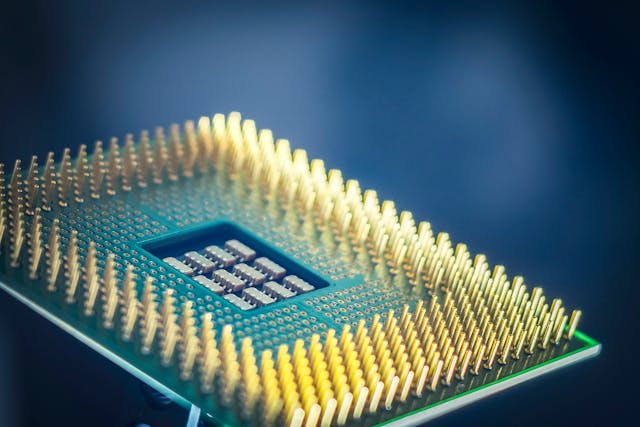
Photonic computing news today reveals how light-powered chips are reshaping AI, quantum computing, and the future of computing.
Photonic computing uses light particles (photons) instead of electrons to process and transmit information. Recent breakthroughs in photonic chips, optical AI processors, and quantum photonic systems are bringing faster, more energy-efficient computing closer to commercial reality, especially for AI and quantum applications.
A strange thing keeps happening whenever I follow developments in advanced computing.
Every few years, a technology appears that promises to replace silicon. Most fade away. Some become useful niche tools. But photonic computing feels different.
Perhaps it’s because the industry’s biggest challenge today isn’t raw processing power. It’s heat. It’s energy consumption. It’s the growing realization that modern AI systems spend enormous amounts of power simply moving data around.
Now imagine replacing much of that electrical traffic with light.
That idea sounds almost poetic at first. Computers powered by photons instead of electrons. Information racing through optical pathways at nearly the speed of light. AI systems generating less heat while processing more data.
Yet what was once confined to university laboratories is rapidly becoming an industrial reality.
Today’s photonic computing landscape is filled with breakthroughs in AI accelerators, optical neural networks, quantum processors, silicon photonics, and light-based interconnects. The technology is still developing, but the pace of progress has become difficult to ignore.
And that’s exactly why photonic computing news today matters far beyond research circles.
What Is Photonic Computing?
Photonic computing refers to computing systems that use photons—particles of light—to process, transmit, or manipulate information.
Traditional computers rely on electrons moving through transistors. Photonic systems replace some or all of those electronic processes with optical components.
The difference sounds simple.
The implications are enormous.
Light travels faster than electrical signals and generates significantly less heat during transmission. This makes photonic architectures especially attractive for data-intensive workloads such as:
- Artificial intelligence
- Machine learning
- Data center networking
- Scientific simulations
- Quantum computing
- Telecommunications
A useful analogy is to imagine a city.
Electronic computing is like moving millions of vehicles through crowded streets.
Photonic computing is like replacing many of those roads with high-speed rail systems operating simultaneously without traffic jams.
The city still functions. It just moves information far more efficiently.
Why Photonic Computing Is Suddenly Making Headlines
For decades, photonic computing existed mostly as a promising research field.
Today, several trends are pushing it into mainstream technology discussions.
AI’s Energy Problem Is Becoming Impossible to Ignore
Modern AI models consume staggering amounts of power.
Training large language models requires vast computational resources. Running those models at scale creates even more pressure on infrastructure.
Many researchers now believe that simply making electronic chips smaller will not solve the industry’s long-term challenges.
Photonic systems offer a different path.
Because light generates less heat and can carry multiple signals simultaneously through different wavelengths, photonic hardware has the potential to dramatically improve efficiency. Recent optical computing developments are increasingly focused on AI inference, where energy savings can translate directly into lower operating costs.
Data Movement Has Become a Bottleneck
One of the least discussed realities of modern computing is that moving data often consumes more energy than processing it.
This is where photonic interconnects enter the picture.
Instead of electrical connections moving information between processors, optical links use light.
The result?
Higher bandwidth.
Lower latency.
Reduced power consumption.
Those benefits are becoming increasingly important as AI systems continue scaling.
The Biggest Photonic Computing News Today
Lightmatter Pushes Optical Interconnect Performance
One of the most significant developments comes from Lightmatter, a company focused on photonic computing infrastructure.
In early 2026, the company demonstrated a record-breaking 1.6 terabits per second throughput per fiber using its Passage co-packaged optics platform. The achievement reportedly delivers up to eight times greater bandwidth density compared to existing alternatives.
This matters because AI clusters increasingly depend on rapid communication between processors.
Computing isn’t just about faster chips anymore.
It’s about faster connections.
NIST Demonstrates Advanced Integrated Photonics
Researchers at the National Institute of Standards and Technology (NIST) recently unveiled a new integrated photonics platform capable of generating thousands of distinct light wavelengths on compact chips. The breakthrough could support future quantum computers, optical clocks, advanced communications systems, and AI hardware.
One particularly interesting detail stands out.
Researchers fit approximately 10,000 photonic circuits onto fingernail-sized chips.
That’s the sort of scaling milestone that moves technology from laboratory curiosity toward manufacturing reality.
Photonic Neural Networks Continue Advancing
Researchers reported new photonic neuromorphic chips capable of learning and decision-making using optical processes. These systems achieved computation latencies of just 320 picoseconds while operating in energy-efficiency ranges comparable to modern GPUs.
A quotable fact:
According to recent research, photonic neuromorphic chips demonstrated on-chip computation latency of only 320 trillionths of a second.
That number feels almost unreal.
Yet it highlights why photonics remains one of the most closely watched fields in computing research.
How Photonic Computing Could Transform Artificial Intelligence
AI and Light Are Becoming Natural Partners
When people hear “AI hardware,” they often think of GPUs.
That makes sense.
GPUs currently dominate machine learning workloads.
But AI operations frequently involve matrix multiplication, a mathematical task that optical systems can perform remarkably efficiently.
This creates an intriguing possibility.
Rather than replacing electronic processors entirely, photonic accelerators could handle specific AI workloads far more efficiently.
Researchers continue demonstrating optical processors capable of image recognition, classification, inference, and neural network operations using photonic architectures.
The Heat Problem Could Become a Competitive Advantage
Data centers increasingly face physical constraints.
Power availability.
Cooling costs.
Infrastructure limitations.
Photonic systems address all three.
A short factual statement worth noting:
Photons generate significantly less heat during information transmission than electrons.
That single advantage may ultimately become one of photonic computing’s strongest commercial arguments.
The Quantum Computing Connection
Why Quantum Companies Are Betting on Photonics
Photonics and quantum computing increasingly overlap.
Some of the most ambitious quantum computing companies are building systems based on photonic qubits rather than competing approaches.
Among the most prominent examples is PsiQuantum.
The company recently expanded efforts toward building large-scale fault-tolerant quantum computers using photonic technologies and secured substantial funding to accelerate development.
The reasoning is straightforward.
Light already travels through global communication infrastructure.
If quantum information can ride on similar technologies, scaling becomes more practical.
At least in theory.
And theory is steadily becoming engineering.
Integrated Quantum Photonics Gains Momentum
Recent research has also demonstrated compact quantum photonic devices manufactured using conventional semiconductor techniques.
One notable example involved a “quantum light factory” integrated into a 1 mm² CMOS chip, combining photonics, electronics, and quantum hardware within traditional manufacturing processes.
That may sound technical.
But the underlying significance is simple.
Quantum technologies are becoming manufacturable.
The Growing Global Competition
United States
American institutions continue driving many major advances.
NIST, Lightmatter, GlobalFoundries, and multiple university research groups are pushing optical computing technologies forward.
Government support for quantum and advanced computing initiatives is also increasing.
China
Chinese researchers have reported significant progress in silicon photonics and optical AI processors.
Recent demonstrations include photonic communication chips capable of extremely high data transmission rates and advanced optical computing systems targeting AI workloads.
Australia
Australia has emerged as an important photonics and quantum computing hub.
Research institutions and companies are contributing to both photonic AI hardware and photonic quantum computing development.
Photonic Computing vs Traditional Computing
| Feature | Electronic Computing | Photonic Computing |
| Information Carrier | Electrons | Photons |
| Heat Generation | Higher | Lower |
| Data Transmission Speed | High | Extremely High |
| AI Efficiency Potential | Strong | Potentially Higher |
| Manufacturing Maturity | Very Mature | Emerging |
| Current Adoption | Universal | Early Commercial Stage |
| Quantum Integration | Limited | Highly Compatible |
The important nuance here is that photonic computing is not necessarily replacing electronic computing.
At least not yet.
The near-term future looks more hybrid than revolutionary.
Silicon and light working together.
Not competing.
The Challenges Nobody Should Ignore
Technology stories often become too optimistic.
Photonic computing deserves excitement.
It also deserves realism.
Manufacturing Complexity
Building reliable photonic circuits at scale remains difficult.
Tiny variations in fabrication can affect performance.
Mass production is improving but remains challenging.
Software Ecosystems
The hardware may advance rapidly.
Software tools often lag behind.
Developers need programming frameworks, optimization tools, and deployment systems designed specifically for photonic architectures.
Not Every Workload Benefits
This point often gets overlooked.
Photonic computing excels at certain tasks.
It is not automatically superior for every computational problem.
Some workloads still favor traditional electronic architectures.
That reality makes hybrid systems increasingly likely.
Beyond the Headlines: What Most Coverage Misses
Many discussions about photonic computing focus on speed.
Speed matters, but it may not be the most important story.
The deeper transformation involves efficiency.
Modern AI infrastructure resembles a city struggling under its own growth. More roads are built. More vehicles appear. Congestion never truly disappears.
Photonic systems offer a different approach.
Instead of widening highways, they change the transportation medium itself.
Light can carry multiple channels of information simultaneously through wavelength division multiplexing. Think of it as several conversations occurring in the same corridor without anyone interrupting one another.
That capability changes how engineers think about bandwidth.
It also changes how future data centers may be designed.
In some ways, photonic computing isn’t simply creating a faster computer.
It’s redesigning the nervous system of computing.
The Rise of Silicon Photonics
One reason photonic computing has gained momentum is the rise of silicon photonics.
This field combines optical technologies with traditional semiconductor manufacturing techniques.
That detail matters more than it first appears.
History shows that superior technologies do not always win. Technologies that fit existing manufacturing ecosystems often move faster.
Silicon photonics allows researchers to leverage decades of investment in chip fabrication infrastructure.
Rather than building an entirely new industry from scratch, companies can adapt existing processes.
This lowers barriers to commercialization.
It also explains why large technology firms are investing heavily in optical technologies.
Startups Driving Innovation
While major corporations receive much of the attention, startups are often where the most radical experimentation occurs.
Companies focused on optical AI accelerators, photonic networking, integrated photonics, and quantum photonics are attracting increasing investment.
Investors are paying attention because the market opportunity is enormous.
AI workloads continue growing.
Cloud infrastructure continues expanding.
Demand for bandwidth continues accelerating.
Each trend strengthens the business case for photonic technologies.
The startup ecosystem is effectively becoming a testing ground for the future of computing.
Some companies will fail.
Others may become foundational players in the next generation of hardware.
What Could Slow Adoption?
Every emerging technology faces obstacles.
Photonic computing is no exception.
Cost remains a challenge.
Manufacturing consistency remains a challenge.
Integration with existing software ecosystems remains a challenge.
There is also a human challenge.
Organizations are often reluctant to replace systems that already work.
Even if photonic hardware delivers superior performance, enterprises will need compelling economic reasons to adopt it.
History suggests adoption will happen gradually.
Not through a sudden replacement of silicon.
Through steady integration.
One subsystem at a time.
Quotable Facts About Photonic Computing
“Integrated photonics aims to process light on chips similarly to how electronic chips process electrons.”
“Photonic neuromorphic chips have demonstrated computation latencies measured in mere picoseconds.”
“Optical interconnects are emerging as a critical solution to AI’s growing bandwidth demands.”
What the Next Five Years May Look Like
Predicting technology is risky.
History enjoys embarrassing confident forecasts.
Still, several trends appear increasingly likely.
Photonic interconnects will become more common in AI infrastructure.
Optical accelerators will expand within specialized AI workloads.
Quantum photonic systems will move closer to practical deployment.
Hybrid electronic-photonic chips will likely become standard in high-performance computing environments.
The most surprising outcome may not be that photonic computing replaces silicon.
It may be that silicon quietly evolves into something new by absorbing photonics into its own ecosystem.
Much like smartphones absorbed cameras, GPS devices, music players, and flashlights.
Sometimes revolutions happen through replacement.
Sometimes they happen through integration.
Photonic computing increasingly looks like the second kind.
FAQ
What is photonic computing?
Photonic computing uses light particles (photons) instead of electrons to process, transmit, or manipulate information in computing systems.
Why is photonic computing important for AI?
Photonic systems can potentially reduce energy consumption, improve bandwidth, lower latency, and decrease heat generation in AI workloads.
Is photonic computing available commercially?
Yes, some photonic technologies are already being commercialized, particularly in optical networking, AI interconnects, and specialized computing hardware.
Can photonic computing replace silicon chips?
Not entirely in the near term. Most experts expect hybrid systems combining electronic and photonic technologies.
How does photonic computing relate to quantum computing?
Many quantum computing platforms use photonic technologies because photons are well suited for transmitting and manipulating quantum information.
Key Takings
- Photonic computing uses light instead of electricity to process and move information.
- Recent photonic computing news today shows accelerating progress in AI, networking, and quantum technologies.
- Optical interconnects are becoming essential for next-generation AI infrastructure.
- Photonic neural networks are achieving impressive speed and efficiency milestones.
- Quantum computing companies increasingly rely on photonic architectures for scalability.
- Manufacturing challenges remain, but commercial adoption is steadily expanding.
- The future likely belongs to hybrid electronic-photonic systems rather than purely optical computers.
Additional Resources
- National Institute of Standards and Technology (NIST): Official research institution covering advanced photonics, quantum technologies, semiconductor innovation, and integrated optical systems.