
What does a water metre look like? Learn how to identify it, read it, and understand the parts inside your home or outside.
A water metre is a small device that measures how much water your home uses.
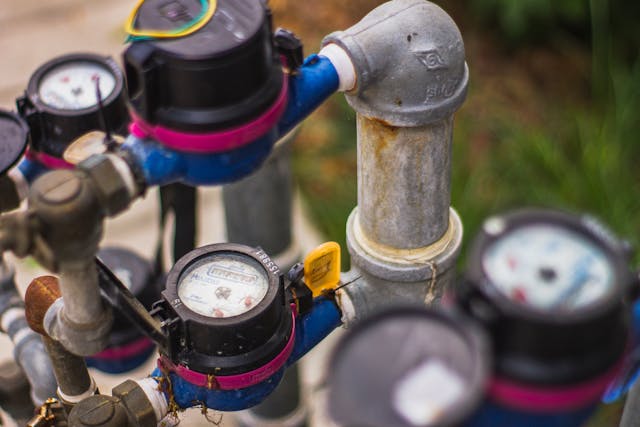
It usually looks like a round dial or digital box, often inside a protective cover or box near your property.
I remember the first time someone told me to “check the water metre.” I stood there, slightly embarrassed, staring at pipes like they were part of some secret language I was supposed to understand. Nothing looked obvious. Nothing said, “Hey, I’m the metre.”
That confusion is more common than you’d think.
We use water every day, showering, cooking, washing, but the device quietly tracking it all? It hides in plain sight. And once you finally recognize it, it feels almost too simple.
So let’s figure it out together, piece by piece.
What Does a Water Metre Look Like?
At its core, a water metre is designed to be functional, not flashy.
Most water metres share a few visual traits:
- A round or rectangular body
- A clear glass or plastic cover
- Numbers or dials showing usage
- Connected pipes entering and exiting
Think of it like a hybrid between a watch face and a utility box. It’s not decorative. It’s precise.
A water metre records water flow in cubic meters or liters using a mechanical or digital display.
That display is your biggest clue.
The Two Main Types You’ll See
Mechanical (Analog) Water Metres
These are the most common, especially in older homes.
They usually look like:
- A circular dial, similar to a clock
- Small spinning needles or digits
- A row of black and white numbers
Sometimes there’s a tiny spinning triangle or wheel inside. That’s not decorative, it moves when water flows.
It’s strangely satisfying to watch. Also slightly unsettling. Every spin equals usage.
Analog water metres use internal gears driven by water flow to calculate consumption.
Digital Water Metres
Newer homes or upgraded systems often use digital versions.
These look like:
- A rectangular box
- An LCD screen
- Sometimes no visible moving parts
Cleaner. More modern. Less intuitive at first glance.
Instead of guessing what a dial means, you just read numbers, like checking a calculator.
Where You’ll Typically Find a Water Metre
This is where things get tricky. Because even if you know what it looks like, you might not know where to look.
Outside the House
Often placed:
- Near the boundary wall
- Inside a ground box with a lid
- Close to the main water line
You might need to lift a small concrete or plastic cover.
It feels a bit like opening a hidden compartment.
Inside the House
In some setups, especially apartments:
- Near the kitchen sink
- In the basement
- Inside a utility cabinet
Here, it blends in with pipes. You could walk past it ten times and not notice.
What Each Part of a Water Metre Means
Once you’ve found it, the next question hits: what am I even looking at?
Let’s break it down.
The Dial or Screen
This shows your water usage.
- Black numbers = full units (cubic meters)
- Red numbers or decimals = fractions
Short version: the bigger numbers matter most for billing.
The Flow Indicator
A small spinning part inside.
If it’s moving, water is flowing.
Even when everything is off.
Which leads to a slightly uncomfortable realization, maybe there’s a leak.
The Cover
Usually glass or plastic.
Protects the internal components.
Sometimes foggy, scratched, or dirty, making it harder to read.
The Pipes
Water goes in one side, out the other.
Simple. Direct. No mystery here.
A Real-Life Moment: Spotting One for the First Time
There’s something oddly memorable about finally identifying your water metre.
You crouch down. Brush away dust. Lift the lid.
And there it is.
Not impressive. Not complex-looking.
Just quietly doing its job.
It’s almost like finding out the “brain” of your water usage is smaller than you imagined.
Why Water Metres Don’t Look Fancy
You might expect something more advanced-looking. Something that screams technology.
But they don’t.
Why?
Because they’re built for:
- Durability
- Accuracy
- Longevity
Not aesthetics.
Some metres last 10–20 years without replacement.
That’s longer than most phones. Longer than many appliances.
Old vs New Water Metres (Quick Comparison)
| Feature | Mechanical Metre | Digital Metre |
| Display | Dial with needles | LCD screen |
| Movement | Visible spinning parts | No visible movement |
| Accuracy | Good | More precise |
| Maintenance | Occasional | Minimal |
| Appearance | Traditional, round | Modern, box-like |
Neither is “better” in every situation.
One feels tangible. The other feels effortless.
Common Misconceptions About Water Metres
“It Should Look Complicated”
Actually, no.
Most are surprisingly simple in design.
That’s intentional.
“It’s Always Outside”
Not always.
Many are indoors, especially in apartments or colder regions.
“If Nothing Moves, There’s No Water Use”
Not entirely true.
Some digital metres don’t show constant movement.
You have to read changes over time.
How to Instantly Recognize One (Even If You’re Unsure)
If you’re still second-guessing, use this quick checklist:
- Is it connected to your main water pipe?
- Does it have numbers or a display?
- Is it enclosed in a small protective casing?
If yes to all three, you’ve probably found it.
Why Knowing What a Water Metre Looks Like Actually Matters
At first, it feels like trivial knowledge.
Until it isn’t.
Imagine:
- Your water bill suddenly spikes
- You suspect a leak
- You need to check usage manually
That small device becomes incredibly important.
Understanding your water metre can help detect leaks early and prevent unnecessary costs.
And suddenly, it’s not just a box anymore.
It’s control.
Subtle Differences Across Regions
Not all water metres look identical.
In some countries:
- They’re buried underground
- Covered with metal lids
- Sealed with tamper-proof locks
In others:
- Mounted visibly on walls
- Easier to access
But the core structure? Almost always the same.
FAQ
What does a water metre look like in a house?
It usually looks like a small round dial or digital box connected to your main water pipe, often inside or just outside your home.
Is a water metre always in a box?
Most are protected by a box or casing, especially outdoor ones, but indoor metres may be exposed.
How can I tell if I found my water metre?
Check for a device connected to the main water line with a display showing numbers or usage indicators.
Do all water metres have spinning parts?
No. Mechanical ones do, but digital metres typically do not show visible movement.
Can a water metre be hidden?
Yes. It can be inside cabinets, underground boxes, or tucked near property boundaries.
Key Takings
- A water metre is a small device that measures household water usage.
- It typically looks like a dial (analog) or a digital display box.
- Most are located near the main water line, inside or outside the property.
- Mechanical metres show spinning parts; digital ones rely on screens.
- Recognizing your water metre helps detect leaks and manage bills.
- Despite different designs, all water metres follow a similar functional layout.
- What looks simple at first is actually one of the most important devices in your home.
Additional Resources:
- WaterSense Program (EPA): A practical guide to saving water at home, with simple tips to reduce usage and improve efficiency.