

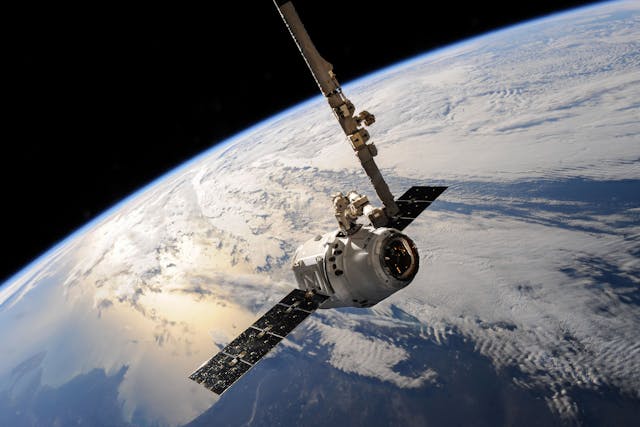
Direct-to-cell satellite news today reveals how space-based mobile networks are eliminating dead zones and transforming connectivity.
Direct-to-cell satellite technology allows ordinary smartphones to connect directly to satellites without requiring special hardware. The latest developments involve Starlink, AST SpaceMobile, global telecom carriers, and regulators working to create mobile coverage that reaches nearly everywhere on Earth.
There was a time when losing mobile signal felt normal.
Road trips came with dead zones. Hiking trails meant silence. Remote villages existed beyond the reach of modern communication. We accepted those limitations because there seemed to be no practical alternative.
Now, something fascinating is unfolding.
The telecommunications industry is quietly attempting one of the most ambitious infrastructure projects ever conceived, not by building more towers on the ground, but by placing them in space.
Following direct-to-cell satellite news today feels like watching the early internet emerge all over again. Every month brings a new partnership, a new satellite launch, or a new regulatory approval that pushes the technology closer to mainstream adoption.
What makes this story particularly compelling is that it doesn’t merely promise faster connectivity.
It promises connectivity where none existed before.
And that changes everything.
What Is Direct-to-Cell Satellite Technology?
Direct-to-cell satellite technology enables ordinary smartphones to communicate directly with satellites orbiting Earth.
Unlike traditional satellite phones, users do not need specialized hardware, external antennas, or expensive dedicated devices.
Your current smartphone remains the same.
The network above it changes.
Instead of connecting exclusively to nearby cellular towers, the phone can communicate directly with specially designed satellites operating in low Earth orbit.
The concept sounds simple.
The engineering challenge behind it is anything but simple.
For decades, mobile networks depended entirely on terrestrial infrastructure. Every call, text, and internet connection relied on a nearby tower. If no tower existed, connectivity disappeared.
Direct-to-cell systems reverse that limitation.
The satellite effectively becomes a cell tower in space.
Why This Matters
Coverage gaps remain one of the biggest unresolved issues in telecommunications.
Even in highly developed countries, millions of square miles remain poorly served or completely disconnected.
These areas include:
- Mountain regions
- National parks
- Deserts
- Oceans
- Remote highways
- Agricultural zones
- Rural communities
Direct-to-cell technology aims to eliminate these blind spots.
Not by expanding from the ground outward.
But by covering the Earth from above.
Direct-to-Cell Satellite News Today: Major Industry Developments
The pace of development has accelerated dramatically.
Several companies are competing to establish leadership in what could become one of the most significant telecommunications markets of the next decade.
AST SpaceMobile Moves Toward Commercial Service
AST SpaceMobile has achieved significant regulatory milestones that bring commercial deployment closer to reality.
The company’s vision centers on providing direct broadband connectivity to standard smartphones using large satellites specifically designed for cellular communication.
Recent approvals have strengthened confidence among investors, mobile operators, and industry observers.
The company continues expanding partnerships with major wireless carriers around the world.
What once looked like an ambitious experiment increasingly appears to be a viable commercial service.
Starlink Expands Direct-to-Cell Capabilities
Starlink remains one of the most closely watched players in the sector.
Leveraging its enormous low-Earth-orbit satellite constellation, the company has aggressively pursued direct-to-cell services through partnerships with mobile operators.
Its strategy emphasizes scale.
Thousands of satellites already orbit Earth.
As newer generations of satellites enter service, capacity and performance are expected to improve substantially.
The company’s approach has helped push direct-to-device connectivity from theory into practical deployment.
Global Telecom Operators Join the Movement
Mobile carriers worldwide are increasingly embracing satellite integration.
For years, telecom providers focused almost exclusively on terrestrial infrastructure.
Now many see satellite connectivity as a natural extension of their existing networks.
Instead of viewing satellites as competitors, operators increasingly view them as partners.
This shift is significant.
It suggests direct-to-cell services may become a standard component of future mobile plans rather than a niche add-on.
How Direct-to-Cell Technology Actually Works
At first glance, the concept seems almost impossible.
How can a smartphone designed to communicate with towers on Earth suddenly reach satellites hundreds of miles above the planet?
The answer lies in advances across multiple fields.
Engineers have improved:
- Antenna technology
- Signal processing
- Satellite design
- Network management
- Spectrum utilization
Modern low-Earth-orbit satellites travel much closer to Earth than traditional communications satellites.
That reduced distance makes direct smartphone communication feasible.
Still, the technical challenges remain immense.
Signals must travel farther.
Satellites move rapidly across the sky.
Power consumption must remain manageable.
Latency must stay low enough for practical communication.
Solving these problems required years of innovation.
A Simple Analogy
Imagine shouting across a football field.
Now imagine shouting across a mountain range.
The second task is significantly harder.
Direct-to-cell engineers essentially found ways to make smartphones whisper across mountain ranges and still be heard clearly.
That achievement represents one of the most impressive telecommunications breakthroughs of the modern era.
The Companies Leading the Direct-to-Cell Revolution
Several organizations are competing to shape the future of space-based mobile connectivity.
Each brings a unique strategy.
Starlink
Starlink’s strength comes from scale.
Its extensive satellite network already provides broadband internet to users around the globe.
Adding direct-to-cell functionality builds upon infrastructure that largely already exists.
The company focuses on creating widespread coverage and rapid deployment.
AST SpaceMobile
AST SpaceMobile focuses specifically on connecting ordinary smartphones directly to satellites.
Its satellites are notably larger than many competitors’ designs.
The company believes larger satellites can deliver stronger signals and improved connectivity.
Lynk Global
Lynk Global pioneered several early direct-to-device concepts.
Its strategy emphasizes partnerships with mobile operators and regulatory cooperation across multiple regions.
The company seeks to integrate seamlessly with existing carrier networks.
Globalstar
Globalstar brings decades of satellite communications experience.
The company has developed a reputation for reliability and continues to play an important role in the evolving direct-to-device ecosystem.
Why Investors Are Watching Closely
Every major technological shift creates uncertainty.
It also creates opportunity.
Direct-to-cell technology sits at the intersection of multiple trillion-dollar industries:
- Telecommunications
- Space technology
- Mobile services
- Emergency communications
- Government infrastructure
That combination naturally attracts attention.
Some analysts compare the sector’s current stage to early cloud computing.
Others see parallels with the birth of mobile broadband.
No one knows exactly how large the market will become.
But few doubt its potential significance.
Direct-to-Cell vs Traditional Mobile Networks
Despite the excitement, satellite connectivity is not expected to replace cellular towers anytime soon.
Instead, both technologies appear likely to complement each other.
| Feature | Traditional Cellular | Direct-to-Cell Satellite |
| Coverage | Tower-dependent | Near-global potential |
| Infrastructure | Ground towers | Satellites in orbit |
| Rural Access | Often limited | Designed for remote areas |
| Disaster Resilience | Vulnerable to local damage | Independent of local infrastructure |
| Expansion Speed | Slow and costly | Coverage expands with launches |
| Device Compatibility | Standard phones | Increasingly standard phones |
The future appears hybrid.
Cell towers remain ideal for cities.
Satellites excel where towers struggle.
Together, they create something neither could achieve alone.
The Consumer Impact Could Be Enormous
Technology discussions often become overly technical.
But the real story is human.
Imagine driving through a remote region late at night.
A vehicle problem occurs.
Historically, you might have found yourself completely disconnected.
With direct-to-cell connectivity, communication remains possible.
The same principle applies to:
- Outdoor adventures
- Maritime travel
- Rural communities
- Disaster response
- Emergency situations
Coverage becomes less fragile.
Connectivity becomes more dependable.
That shift has profound implications.
Emergency Communications
Emergency response may become one of the most valuable applications.
Natural disasters frequently damage terrestrial networks.
Floods, hurricanes, earthquakes, and wildfires can disable towers when communication is needed most.
Satellites remain above the disruption.
That resilience could save lives.
Rural Connectivity
Many rural communities remain underserved because building towers in sparsely populated regions is often expensive.
Direct-to-cell technology changes the economics.
Coverage can expand without requiring extensive new infrastructure on the ground.
Travel and Exploration
Outdoor enthusiasts stand to benefit significantly.
Remote trails, mountains, deserts, and offshore environments could become connected in ways previously impossible.
For many travelers, connectivity may eventually become something they no longer need to think about.
The Challenges Still Facing the Industry
The excitement surrounding direct-to-cell technology is justified.
But challenges remain.
Ignoring them would paint an incomplete picture.
Capacity Constraints
A satellite covering a vast geographic area cannot currently match the capacity of dense urban cellular networks.
This reality explains why many early deployments prioritize:
- Text messaging
- Emergency alerts
- Voice communication
- Basic data services
Advanced broadband experiences remain a work in progress.
Regulatory Complexities
Satellites operate globally.
Regulations do not.
Each country maintains unique telecommunications laws, licensing requirements, and spectrum policies.
Navigating these frameworks remains one of the industry’s most difficult tasks.
Economic Questions
A critical question remains unanswered.
How profitable will direct-to-cell services ultimately become?
The technology is impressive.
Demand appears strong.
Yet long-term business models continue evolving.
History shows that groundbreaking technologies often require years to find sustainable economic structures.
Could Direct-to-Cell Change Global Connectivity Forever?
This question sits at the heart of today’s discussions.
And honestly, the answer increasingly appears to be yes.
Not because satellites will replace every tower.
Not because every phone call will travel through space.
But because connectivity is gradually transforming from a privilege of location into a universal expectation.
For decades, geography determined communication.
Where you stood mattered.
In the coming years, that limitation may fade.
The ability to communicate could become nearly independent of physical location.
That represents a profound shift.
One that feels obvious only after it happens.
What Happens Next?
The next phase of development will likely focus on three areas.
More Satellites
Expanding constellations will improve coverage, reliability, and capacity.
Every launch strengthens the network.
Faster Data Speeds
Current systems prioritize basic connectivity.
Future generations aim to support richer experiences, including higher-speed internet access.
Expanded Carrier Partnerships
More mobile operators are expected to integrate satellite services into their offerings.
This trend could accelerate adoption significantly.
The broader the partnerships become, the more seamless the user experience becomes.
FAQ
What is direct-to-cell satellite technology?
Direct-to-cell satellite technology allows standard smartphones to connect directly to satellites without requiring specialized satellite phones or external hardware.
Which companies are leading direct-to-cell services?
Major participants include Starlink, AST SpaceMobile, Lynk Global, and Globalstar.
Can direct-to-cell satellites provide internet access?
Yes. Current systems focus heavily on messaging and voice services, while future developments aim to support broader internet connectivity.
Do users need a special smartphone?
Most direct-to-cell systems are designed to work with standard smartphones already in use today.
Will direct-to-cell eliminate mobile dead zones?
That is the primary objective. While coverage will vary by provider and region, the technology specifically targets areas beyond traditional cellular reach.
Key Takings
- Direct-to-cell satellite technology enables smartphones to connect directly to satellites.
- Recent direct-to-cell satellite news today highlights rapid progress across the industry.
- Major players include Starlink, AST SpaceMobile, Lynk Global, and Globalstar.
- Satellite connectivity is designed to complement rather than replace traditional cellular networks.
- Rural regions and emergency communications may benefit significantly.
- Regulatory approvals continue accelerating commercial deployment worldwide.
- The long-term vision is near-continuous global mobile coverage with fewer dead zones than ever before.