

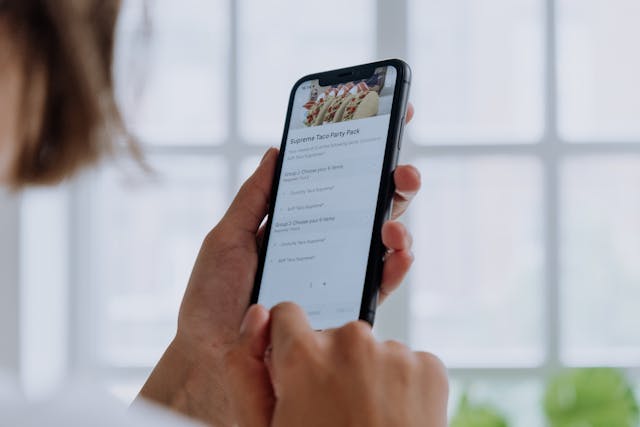
Discover how a food delivery app development company builds scalable, customer-focused platforms for modern food businesses.
A food delivery app development company specializes in creating mobile and web platforms that connect customers, restaurants, delivery partners, and business owners in a seamless food ordering ecosystem.
These companies design, develop, test, and maintain food delivery applications that help businesses increase revenue, improve customer experiences, and streamline operations.
There was a time when ordering food meant searching for a restaurant’s phone number, waiting for someone to answer, repeating an address twice, and hoping the order arrived correctly.
That experience feels surprisingly distant now.
Today, food arrives through a few taps on a smartphone. Customers can compare restaurants, track drivers in real time, pay digitally, and receive personalized recommendations without speaking to anyone. What changed wasn’t simply technology. It was expectation.
Convenience quietly became a requirement.
Many restaurant owners discover this shift gradually. A restaurant may serve exceptional food, receive glowing reviews, and maintain loyal customers, yet still struggle to compete against businesses offering a smoother digital experience.
This is where a food delivery app development company becomes valuable.
At first, creating a food delivery application sounds straightforward. Add menus. Accept payments. Assign drivers. Deliver food.
But beneath that simple concept lies an intricate digital ecosystem involving customer psychology, logistics optimization, restaurant management, payment security, real-time communication, analytics, and increasingly, artificial intelligence.
The companies building these platforms are not just software vendors. They are architects of modern convenience.
Understanding how they work reveals why some food delivery businesses scale rapidly while others struggle to gain momentum.
What Is a Food Delivery App Development Company?
A food delivery app development company develops digital solutions that allow customers to order meals online while enabling restaurants and delivery personnel to manage operations efficiently.
Think of a food delivery platform as a living city.
Customers represent residents.
Restaurants represent businesses.
Drivers represent transportation systems.
The software itself acts as the roads, traffic signals, maps, and communication networks connecting everything together.
Without strong infrastructure, even excellent restaurants can struggle to deliver a positive customer experience.
A food delivery app development company ensures that every component works together seamlessly.
Core Services Offered
Most professional development companies provide a complete suite of services, including:
- Mobile app development
- Web platform development
- User experience design
- Backend architecture
- Cloud infrastructure setup
- Payment integration
- GPS tracking systems
- Driver management solutions
- Analytics dashboards
- Maintenance and support
The goal is not simply to launch an application. The goal is to create a scalable business ecosystem.
Why Food Delivery Apps Continue to Dominate the Market
Food delivery applications have become one of the most influential digital business models in recent years.
The reason goes beyond technology.
People are purchasing convenience.
Time has become one of the most valuable resources in modern life. Between work responsibilities, family commitments, commuting, and personal obligations, consumers increasingly prioritize services that save time.
A food delivery application transforms a process that once required effort into something almost effortless.
This shift has changed customer expectations permanently.
The Convenience Economy
Modern consumers increasingly evaluate experiences based on simplicity.
If ordering from one restaurant requires ten steps while another requires three, convenience often wins.
Even when the food quality is similar.
Even when prices are comparable.
The ordering experience itself becomes part of the product.
Changing Consumer Behavior
Several behavioral trends continue driving food delivery growth:
- Mobile-first purchasing habits
- Growing digital payment adoption
- Demand for instant gratification
- Increased reliance on convenience services
- Preference for personalized experiences
These trends create ongoing opportunities for businesses investing in digital delivery solutions.
Essential Features Every Food Delivery App Needs
Successful food delivery applications are built around solving customer problems quickly and efficiently.
Every feature should remove friction from the ordering journey.
Customer Application Features
User Registration and Login
Customers expect a simple onboarding process.
Lengthy registration forms often lead to abandonment.
Many successful applications support:
- Social login
- Email registration
- Phone authentication
- One-tap sign-in
The easier it is to start, the more likely users are to complete an order.
Restaurant Discovery
Users need effective ways to find restaurants that match their preferences.
Filtering options often include:
- Cuisine type
- Distance
- Delivery time
- Ratings
- Popular dishes
- Price range
The discovery process should feel intuitive rather than overwhelming.
Smart Search Functionality
People don’t always know exactly what they want.
Sometimes they search for a meal.
Sometimes they search for a craving.
A strong search engine helps users find both.
Real-Time Tracking
One of the most powerful features in modern delivery apps is live order tracking.
Customers appreciate visibility.
Watching an order move from preparation to delivery creates transparency and reduces anxiety.
Secure Payments
Payment flexibility improves conversion rates.
Most modern platforms support:
- Credit cards
- Debit cards
- Mobile wallets
- Bank transfers
- Cash on delivery
Security remains critical throughout the payment process.
Restaurant Dashboard Features
Restaurants need control over operations.
Important features include:
- Menu management
- Pricing updates
- Inventory tracking
- Order processing
- Customer communication
- Sales analytics
These tools allow restaurant owners to make informed business decisions.
Delivery Driver Application
Drivers represent a critical part of the customer experience.
Features commonly include:
- Route optimization
- Navigation support
- Earnings tracking
- Availability settings
- Delivery status updates
The easier it is for drivers to perform their jobs, the faster deliveries become.
Administrative Dashboard
Business administrators require a complete overview of platform activity.
This typically includes:
- User management
- Restaurant management
- Driver oversight
- Revenue monitoring
- Performance analytics
- Promotional campaign management
The admin panel functions as the command center of the entire platform.
Technologies Used by a Food Delivery App Development Company
Technology choices influence performance, scalability, security, and long-term success.
Choosing the right technology stack is one of the most important decisions during development.
Mobile Development Frameworks
Popular technologies include:
- Flutter
- React Native
- Swift
- Kotlin
These frameworks allow developers to build fast, responsive applications that work across multiple devices.
Backend Technologies
Backend systems power the application’s core functionality.
Common choices include:
- Node.js
- Python
- Java
- .NET
These technologies manage databases, user authentication, notifications, and order processing.
Cloud Infrastructure
Modern food delivery platforms rely heavily on cloud computing.
Cloud systems provide:
- Scalability
- Reliability
- Security
- Performance optimization
During peak demand periods, cloud infrastructure helps maintain a smooth user experience.
Artificial Intelligence and Machine Learning
AI is increasingly transforming food delivery applications.
Advanced platforms use AI for:
- Personalized recommendations
- Customer behavior analysis
- Demand forecasting
- Route optimization
- Dynamic pricing
The future of food delivery is becoming increasingly predictive.
Applications are learning customer preferences and anticipating needs before users actively search.
Types of Food Delivery Business Models
Not every food delivery platform operates in the same way.
Different business goals require different development approaches.
Aggregator Model
This model brings multiple restaurants onto a single marketplace.
Customers browse options from numerous vendors within one application.
Revenue typically comes from:
- Commission fees
- Delivery charges
- Advertising opportunities
This model has proven highly scalable.
Restaurant-Owned Apps
Some restaurants prefer complete ownership of their customer relationships.
Dedicated branded applications provide:
- Greater control
- Direct customer communication
- Reduced commission costs
- Stronger brand loyalty
This approach works particularly well for established restaurant brands.
Logistics-Based Model
In this structure, restaurants prepare food while the platform handles delivery logistics.
The focus shifts toward transportation efficiency rather than food preparation.
Cloud Kitchen Model
Cloud kitchens operate exclusively through delivery channels.
Without traditional dining spaces, their entire business depends on digital ordering platforms.
As a result, software quality directly impacts profitability.
The Food Delivery App Development Process
Successful development follows a structured process.
Skipping stages often creates expensive problems later.
Discovery and Research
The first stage involves understanding:
- Business goals
- Market opportunities
- Competitor strategies
- Customer expectations
Research frequently uncovers insights that challenge initial assumptions.
What business owners believe customers want is not always what customers actually value.
User Experience Design
User experience design determines how customers interact with the platform.
The best designs feel effortless.
Users should focus on ordering food, not figuring out navigation.
Development
Once designs are approved, developers begin building:
- Customer applications
- Restaurant dashboards
- Driver applications
- Administrative systems
- Backend infrastructure
Every component must function as part of a larger ecosystem.
Testing and Quality Assurance
Testing identifies issues before customers encounter them.
Areas commonly tested include:
- Security
- Performance
- Compatibility
- Functionality
- User experience
Small issues can have significant effects on customer retention.
Deployment and Launch
Launching the platform is an important milestone.
But it is not the finish line.
Successful applications evolve continuously based on customer feedback and market demands.
How Much Does Food Delivery App Development Cost?
Cost varies considerably depending on project scope and complexity.
Businesses often underestimate how many systems work together behind the scenes.
Factors Affecting Cost
Development costs are influenced by:
- Feature requirements
- Platform complexity
- Design quality
- Third-party integrations
- Team expertise
- Geographic location
Typical Investment Ranges
| Development Level | Estimated Cost |
| Basic MVP | $15,000 – $40,000 |
| Mid-Level Solution | $40,000 – $100,000 |
| Enterprise Platform | $100,000 – $300,000+ |
While budget matters, long-term value matters more.
Choosing a development partner solely based on price can create expensive consequences later.
How to Choose the Right Food Delivery App Development Company
Selecting the right partner often determines project success.
Evaluate Industry Experience
Experience in food delivery development matters.
Logistics platforms involve unique technical challenges that differ from many other mobile applications.
Review Past Projects
A portfolio reveals practical expertise.
Look beyond visual design.
Focus on functionality, scalability, and user experience.
Assess Technical Capabilities
Strong development teams typically possess expertise in:
- Mobile development
- Cloud infrastructure
- API integrations
- Security protocols
- Data analytics
Technical depth becomes increasingly important as platforms scale.
Communication Matters
Projects rarely fail because technology is impossible.
More often, failures stem from misunderstandings and poor communication.
Transparent collaboration significantly improves outcomes.
Long-Term Support
Applications require ongoing maintenance.
Operating systems evolve.
Security threats emerge.
Customer expectations change.
The best development partners continue supporting growth long after launch.
Future Trends Shaping Food Delivery App Development
Technology continues redefining customer expectations.
The next generation of delivery applications will likely feel dramatically different from today’s platforms.
Hyper-Personalization
Future platforms will become increasingly personalized.
Recommendations will be based on:
- Previous orders
- Dietary preferences
- Behavioral patterns
- Time of day
- Weather conditions
Personalization improves both convenience and customer satisfaction.
Voice Ordering
Voice interfaces are becoming more common.
Customers may soon place orders through natural conversations rather than traditional menus.
Autonomous Deliveries
Delivery robots and autonomous vehicles continue advancing.
Although widespread adoption remains gradual, automation may transform logistics over the next decade.
Sustainability Features
Environmental concerns are influencing consumer choices.
Future applications may increasingly emphasize:
- Eco-friendly packaging
- Carbon-conscious deliveries
- Sustainable restaurant partnerships
Predictive Ordering
Imagine opening an app that already knows what you are likely to order.
That future is approaching.
Predictive technologies will continue reducing friction in the customer journey.
Comparative Analysis: Custom Development vs Ready-Made Solutions
| Factor | Custom Development | Ready-Made Solution |
| Flexibility | High | Limited |
| Branding | Complete Control | Restricted |
| Initial Cost | Higher | Lower |
| Scalability | Excellent | Moderate |
| Competitive Advantage | Strong | Limited |
| Feature Customization | Unlimited | Constrained |
| Long-Term Growth Potential | High | Moderate |
Custom development often requires greater upfront investment but provides stronger long-term differentiation.
FAQ Section
What does a food delivery app development company do?
A food delivery app development company creates software solutions that connect customers, restaurants, delivery drivers, and administrators through digital ordering platforms.
How long does food delivery app development take?
Development timelines typically range between three and twelve months depending on project complexity and feature requirements.
What technologies are commonly used?
Popular technologies include Flutter, React Native, Node.js, Python, cloud infrastructure, GPS tracking systems, and AI-driven recommendation engines.
Can restaurants build their own delivery app?
Yes. Many restaurants create branded applications to improve customer retention, increase profitability, and strengthen direct relationships with customers.
Is custom development worth the investment?
For businesses seeking scalability, brand differentiation, and long-term growth, custom development often delivers significant competitive advantages.
Key Takings
- A food delivery app development company creates digital ecosystems connecting customers, restaurants, drivers, and administrators.
- Customer convenience remains the primary driver behind food delivery platform growth.
- Successful applications combine intuitive design, strong logistics systems, and secure payment infrastructure.
- Artificial intelligence is increasingly shaping personalized food ordering experiences.
- Choosing an experienced development partner significantly impacts project success.
- Custom-built platforms provide greater flexibility and long-term scalability.
- Future food delivery applications will become more predictive, personalized, automated, and sustainable.