
Discover how the TPQ 53 radar detects rockets, artillery, and mortars, helping modern armies locate threats within seconds.
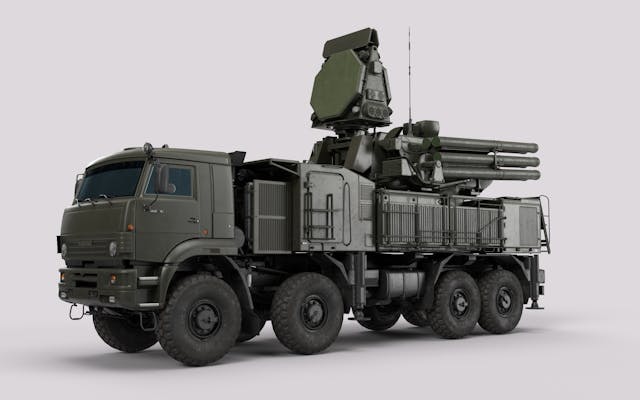
The TPQ 53 radar, officially designated AN/TPQ-53, is a mobile counterfire radar system designed to detect, track, and locate enemy artillery, rocket, and mortar fire. It uses advanced AESA radar technology to identify where a projectile originated, allowing friendly forces to respond rapidly and accurately.
Imagine hearing an artillery shell before you see it. Then imagine having only a few seconds to figure out where it came from.
For decades, armies faced that exact problem. A rocket streaks through the sky, a mortar round arcs over a ridge, and by the time the explosion happens, the crew that fired it may already be preparing their next shot.
That’s where the TPQ 53 radar enters the story.
The first time I began digging into modern counter-battery systems, I assumed the real challenge was intercepting incoming rounds. Surprisingly, that isn’t always the priority. Sometimes the smartest move is finding the shooter. Not the projectile. The source.
The AN/TPQ-53 was built around that idea.
It doesn’t simply watch the battlefield. It reconstructs events in real time, tracing projectiles backward through space and identifying where hostile weapons are hidden. In many ways, it acts like a battlefield detective—collecting clues in milliseconds and producing answers before the next attack arrives.
Today, the TPQ 53 radar is considered one of the most important counterfire systems in modern military operations. Yet its significance extends far beyond artillery detection.
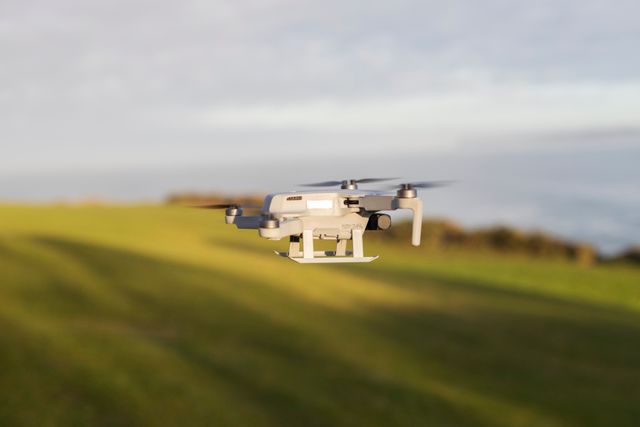
The system has evolved into a multi-mission radar capable of supporting air surveillance, drone detection, and broader battlefield awareness.
What Is the TPQ 53 Radar?
The TPQ 53 radar, formally known as the AN/TPQ-53, is a mobile Active Electronically Scanned Array (AESA) radar developed for the U.S. Army and manufactured by Lockheed Martin. It was designed primarily as a counterfire target acquisition radar.
Its mission sounds simple:
Detect incoming fire.
Track the projectile.
Calculate its origin.
Report the firing location.
In practice, accomplishing those four steps requires extraordinary computing power and radar precision.
The system can detect:
- Mortar rounds
- Artillery shells
- Rocket attacks
- Certain aerial threats
- Unmanned aerial systems (UAS) and drones
One of the most remarkable aspects of the radar is speed. The radar processes trajectories almost instantly, giving commanders critical information while an attack is still unfolding.
Quotable Fact: The AN/TPQ-53 can operate in both 90-degree and full 360-degree surveillance modes.
The Problem the TPQ 53 Was Built to Solve
Modern artillery warfare often becomes a contest of timing.
A hidden mortar team may fire several rounds and relocate before counterfire arrives. Rocket launchers can shoot and move in minutes. In some conflicts, crews relocate in less time than it takes traditional systems to determine their location.
The challenge is not merely seeing an incoming threat.
The challenge is answering a harder question:
“Where exactly did that round come from?”
Before systems like the TPQ 53 became widespread, locating enemy indirect-fire positions often required visual observation, aerial reconnaissance, or slower intelligence gathering methods.
The radar transformed that equation.
Instead of searching for the enemy after an attack, it calculates the launch point from the projectile’s flight path.
Think of it like seeing a baseball halfway through its flight and instantly determining where the pitcher stood.
Except the baseball is traveling at extreme speed.
And lives depend on the answer.
How the TPQ 53 Radar Works
Detection Phase
The radar continuously scans designated sectors of the battlefield.
When a rocket, mortar, or artillery round enters its surveillance area, the radar identifies the object and begins tracking it.
Tracking Phase
The AESA radar monitors the projectile’s movement through the air.
Unlike older radar systems that relied heavily on mechanical movement, AESA technology electronically steers radar beams, allowing faster and more flexible target tracking.
Trajectory Analysis
This is where the real magic happens.
The radar collects trajectory data and uses advanced processing algorithms to determine:
- Point of origin
- Point of impact
- Projectile classification
- Threat priority
The process occurs in seconds.
Counterfire Support
Once the source location is identified, friendly forces can receive coordinates for counter-battery operations.
The result is a dramatically shorter response cycle.
The battlefield essentially gains a memory.
Every projectile leaves a trail.
The TPQ 53 follows it backward.
AESA Technology: The Hidden Advantage
Many discussions about the TPQ 53 focus on artillery detection, but the radar’s true strength lies in its architecture.
The system uses an Active Electronically Scanned Array.
That phrase sounds technical, yet its impact is straightforward.
Traditional radars often rotate mechanically.
AESA radars move their beam electronically.
The difference is like comparing a flashlight you physically turn versus thousands of tiny flashlights that instantly point wherever needed.
Faster Target Acquisition
Electronic beam steering dramatically reduces reaction time.
Improved Reliability
Fewer moving parts often translate into lower maintenance requirements and greater operational readiness.
Multi-Mission Capability
The radar can support multiple missions simultaneously, including counterfire and air surveillance.
Better Survivability
Modern radar systems must operate in environments filled with electronic warfare threats.
AESA designs provide greater flexibility against jamming and electromagnetic challenges.
TPQ 53 Radar Mobility: Why Speed Matters
A radar that stays in one location too long can become a target itself.
This creates an interesting contradiction.
The radar exists to locate enemy firing positions.
Yet enemies also want to locate the radar.
The TPQ 53 addresses this problem through mobility.
According to manufacturer specifications, the radar can be rapidly deployed and removed from position in minutes. It supports highly mobile battlefield operations and can accompany maneuver forces.
This mobility changes operational behavior.
Instead of acting like a fixed installation, the radar becomes a moving sensor network.
Detect.
Report.
Relocate.
Repeat.
That cycle is increasingly important in modern warfare.
From Counterfire Radar to Multi-Mission Sensor
One of the most fascinating developments surrounding the TPQ 53 radar is its evolution.
Initially, many viewed it strictly as a counter-battery radar.
That description is no longer sufficient.
Recent upgrades have expanded its capabilities into:
Drone Detection
The radar has demonstrated the ability to identify and track unmanned aerial systems.
Air Surveillance
The system can contribute to broader airspace monitoring missions.
Short-Range Air Defense Support
The radar can integrate into layered air-defense architectures.
This evolution reflects a broader military trend.
Battlefields are becoming more crowded.
Artillery shells, drones, helicopters, rockets, and cruise threats may all appear in the same operational environment.
Sensors must adapt.
The TPQ 53 appears to be doing exactly that.
TPQ 53 Radar vs Legacy Firefinder Systems
The AN/TPQ-53 was developed to replace older Firefinder radars, particularly the AN/TPQ-36 and AN/TPQ-37 systems.
Comparison Table
| Feature | AN/TPQ-36/37 Firefinder | AN/TPQ-53 |
| Technology | Older phased-array design | Modern AESA architecture |
| Coverage | Sector-focused | 90° or 360° coverage |
| Mobility | Moderate | Enhanced mobility |
| Crew Requirements | Larger | Reduced crew size |
| Air Surveillance | Limited | Expanded capability |
| Drone Detection | Minimal | Integrated capability |
| Reliability | Legacy platform | Improved reliability |
The difference is not merely technological.
It reflects a shift in military thinking.
Modern radars are expected to perform multiple roles rather than a single specialized task.
Operational History and Combat Experience
A radar can look impressive in a brochure.
Combat tells a different story.
The TPQ 53 has been deployed operationally since 2010 and has supported military operations in active conflict zones, including Iraq and Afghanistan.
That operational history matters.
Real-world environments expose weaknesses that laboratory testing cannot.
Dust.
Heat.
Electronic interference.
Constant movement.
The radar’s continued use suggests it has proven valuable under demanding conditions.
Quotable Fact: The TPQ 53 has been successfully deployed in combat operations for more than a decade.
Why the TPQ 53 Matters in Modern Warfare
Modern conflicts increasingly feature dispersed forces, drone swarms, long-range artillery, and rapid movement.
That changes the role of sensors.
The battlefield is no longer about who has the biggest gun.
It’s often about who sees first.
The TPQ 53 radar contributes to that advantage by reducing uncertainty.
Every artillery round becomes information.
Every rocket launch creates data.
Every detected trajectory reveals a story.
In military operations, information frequently arrives before action.
The radar helps ensure that information arrives quickly enough to matter.
Common Misconceptions About the TPQ 53
“It Only Detects Artillery”
Not anymore.
The radar’s multi-mission architecture allows it to contribute to air surveillance and drone tracking roles.
“It Replaces Air Defense Systems”
Not exactly.
The radar supports air-defense networks but does not replace dedicated interceptor systems.
“It’s a Stationary Radar”
The opposite is true.
Mobility is one of its defining characteristics.
“Counterfire Radars Are Easy Targets”
Counterfire radars face risks, but mobility, deployment tactics, and frequent repositioning help improve survivability.
FAQ About TPQ 53 Radar
What does TPQ 53 radar do?
The AN/TPQ-53 detects, tracks, and locates enemy rockets, artillery, and mortar fire while also supporting air surveillance and drone detection missions.
Who manufactures the TPQ 53 radar?
The system is manufactured by Lockheed Martin for the U.S. Army and international customers.
Is the TPQ 53 an AESA radar?
Yes. The radar uses Active Electronically Scanned Array technology, enabling rapid electronic beam steering and multi-mission operation.
Can the TPQ 53 detect drones?
Yes. The radar has demonstrated the capability to identify and track unmanned aerial systems.
What radar systems did the TPQ 53 replace?
It was developed to replace the aging AN/TPQ-36 and AN/TPQ-37 Firefinder radar systems.
Key Takings
- The TPQ 53 radar is a mobile counterfire radar designed to locate enemy artillery, rockets, and mortars.
- It uses advanced AESA technology for rapid detection and tracking.
- The system can operate in both 90-degree and 360-degree surveillance modes.
- TPQ 53 evolved from a counter-battery radar into a multi-mission battlefield sensor.
- Drone detection and air surveillance are now part of its operational portfolio.
- The radar replaced older Firefinder systems while improving mobility, reliability, and operational flexibility.
- More than a decade of combat deployment has helped establish the TPQ 53 radar as a proven battlefield capability.
Additional Resources
- Lockheed Martin Radar Technologies: Offers detailed insight into AESA radar development, sensor innovation, and next-generation defense technologies.